By Edward Gero
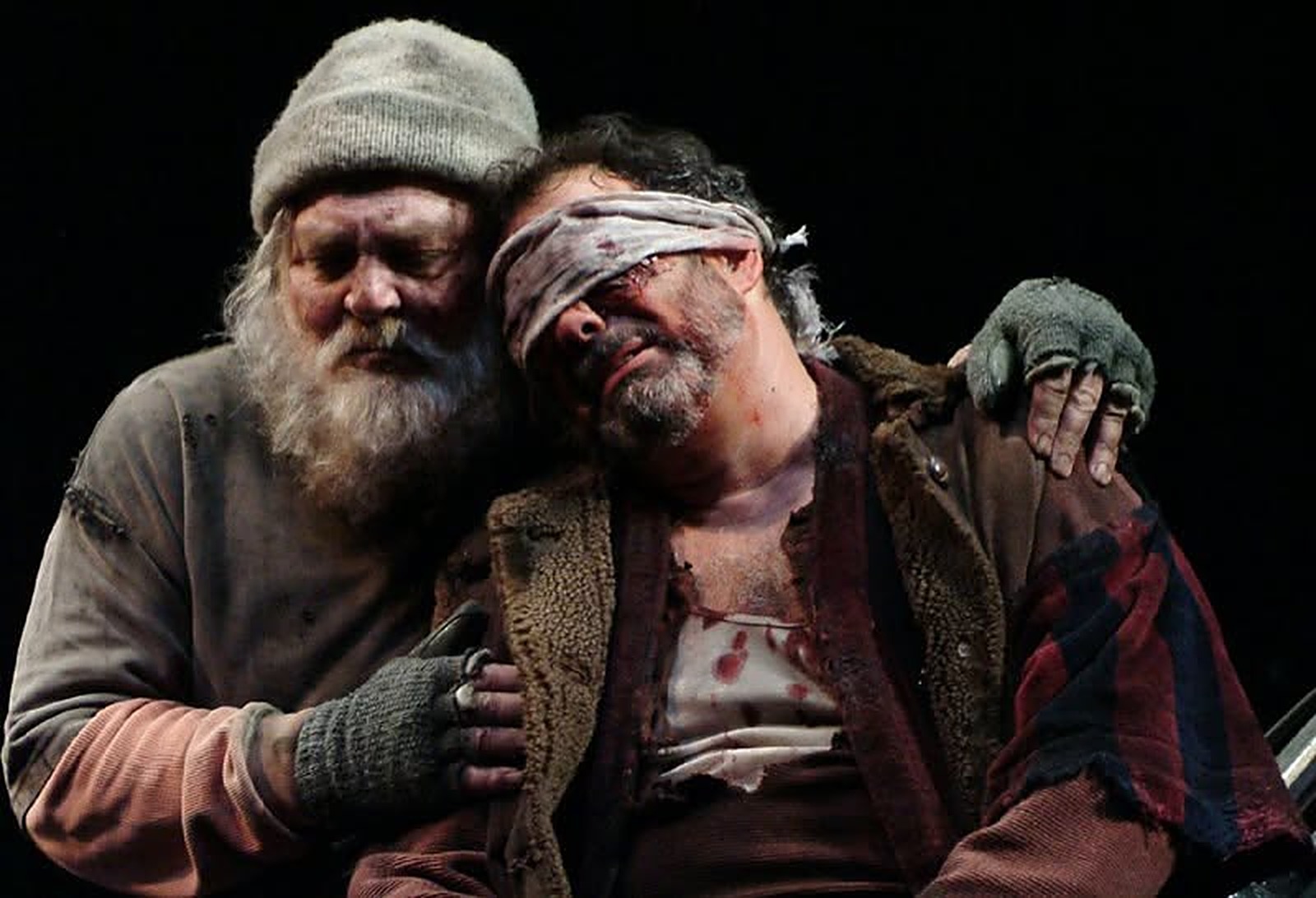
Why should a dog, a horse, a rat have life,
King Lear, Act 5, Scene 3
And thou no breath at all? Thou’lt come no more,
Never, never, never, never, never.
Stacy Keach died on Tuesday, November 10, at his home in Magdalenka, Poland, after a long battle with heart failure. He was 85. The New York Times remembers him as the actor who embodied both Hamlet and Mike Hammer. I remember him as my hero, and then, for more than thirty-five years, as my friend.
I heard the news from a friend in a message that said only “Condolences.” I knew. I spent the rest of the night posting, and gathering photographs, and reading what people were writing about him and sending their condolences to me. The cast of our King Lear found each other via texts within about fifteen minutes. The world is grieving him, and I’m grateful for that.
The first time I saw him
I owe the first sight of him to my high school drama teacher, Jim Albertson. Jim had already introduced me to Broadway with Ellis Rabb’s APA-Phoenix production of Hamlet. Then, in the summer of 1969, when I was fifteen, Jim said, “Let’s go to the Delacorte. Free theatre in the park. We’re going to see a play called Peer Gynt.” I thought, sure, let’s do this.
We got our tickets and sat on a park bench near the entrance at 81st Street and Central Park West, waiting to go in. It was summer, and beautiful. I looked up toward the theatre and saw a couple walking down the asphalt path, and I thought, oh my God. A woman with long brown hair and steel-blue eyes was walking toward me. “Jim, look,” I said. “It’s Judy Collins.” I had been listening to her records for years. She was one of the voices of my generation, and I was starstruck. Jim said, “No, no, no,” and pointed to the man beside her. “That’s Stacy Keach.”
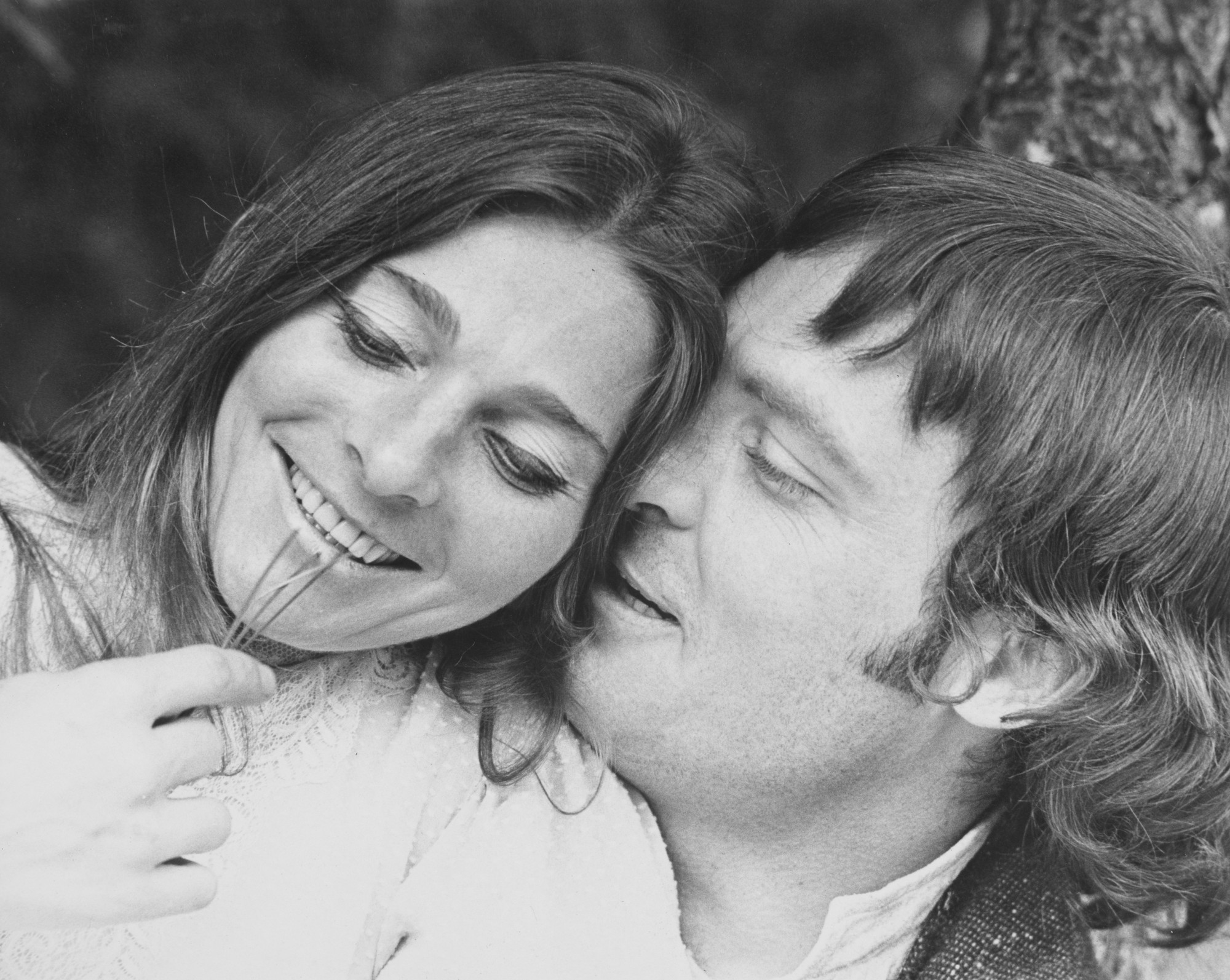
Stacy was about to play Peer Gynt, and Judy Collins was playing Solveig. They were together at the time. As it turned out, a college pal of Jim’s, Joe Rose, was in the ensemble, and afterward we got to go backstage to meet him. It was the first time I saw Stacy perform, and he was physical, vibrant, and athletic.
What I remember most is one scene, staged on a set by the great Ming Cho Lee. On his travels, Peer is thrown overboard and finds himself in the middle of the ocean with a character called the Strange Passenger, who may be a figure for death. To stage it, Ming put the entire ensemble under an enormous sheet of blue Chinese silk. Underneath, they held Stacy and the Strange Passenger up by the hips and shoulders and moved their arms to make the sea billow, raising and lowering the two men and carrying them around the space (New York Times). When Peer reached shore, the ensemble gently lowered the two actors to the deck, and the silk was pulled off upstage center and down the stairs. It looked as if the whole ocean had drained away. It was a real coup de théâtre.
Nearly thirty years later, Michael Kahn directed Peer Gynt at the Shakespeare Theatre, with sets by Ming Cho Lee, and I was playing the Strange Passenger (STC). When we came to that scene, Michael asked, “How are we going to do this scene?” I told him the story of the great blue Chinese silk. “No, no, no,” Michael said. “We can’t do that. It’s already been done. I can’t do that again. Get Ming in here,” he barked. Ming, who was very soft-spoken, came in, and Michael asked him how we were going to do the scene. Ming said, “Well, Michael, when I did the play at the Delacorte, we used this blue Chinese silk.” Michael cut him off: “Yes, yes, I know, I know. Let’s do that.” Without any acknowledgment to me. But even that was a full-circle moment: the scene that had stayed with me since that first night, and now I was in it.
The actor I wanted to be
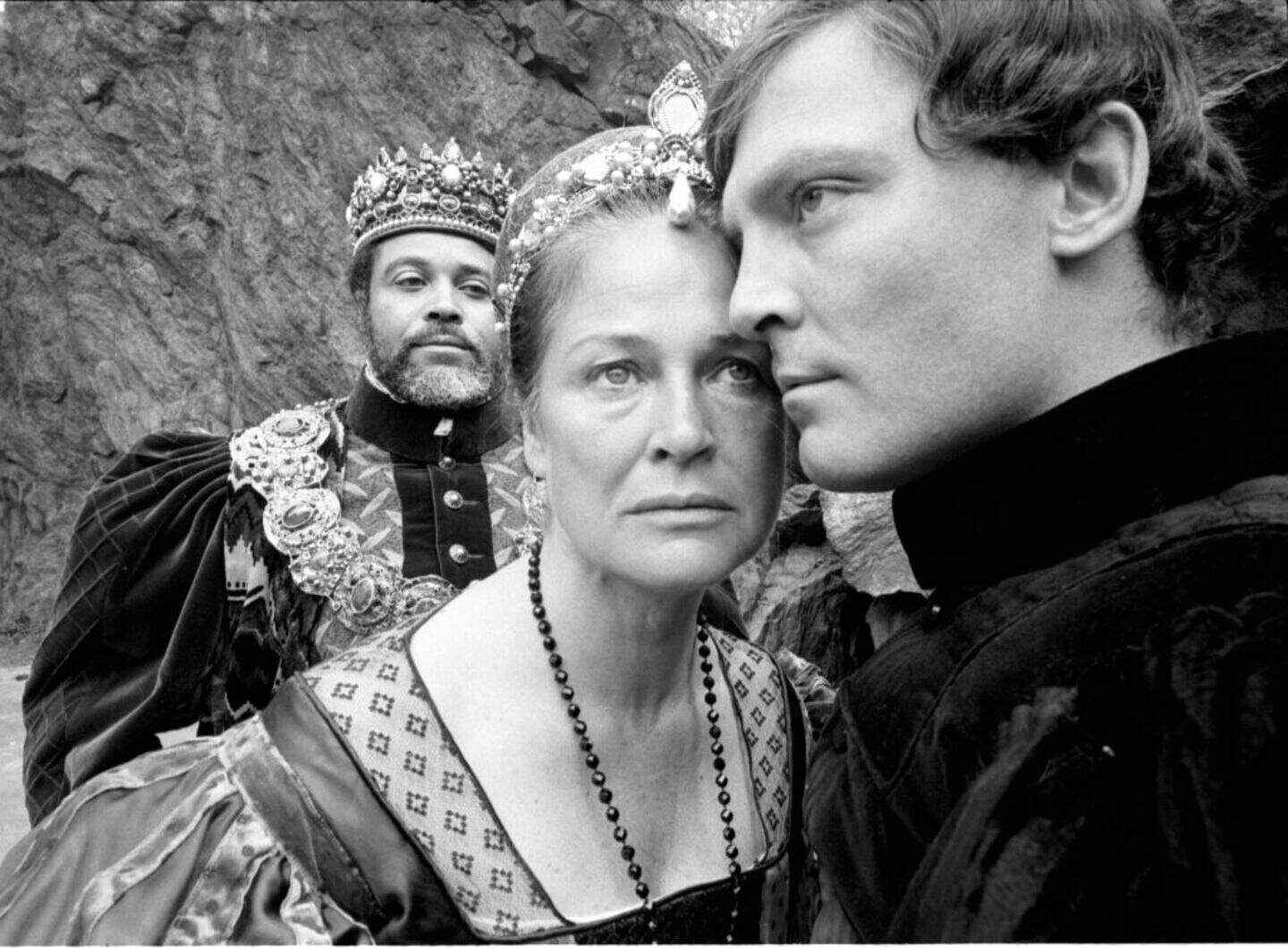
Three summers after Peer Gynt, in 1972, when I was seventeen and just out of high school, I saw Stacy play Hamlet at the Delacorte Theater in Central Park, with James Earl Jones and Colleen Dewhurst in the company (Shakespeare Theatre Company). I went home wanting to be like him. That night set me on the road to a life in the classical theatre.
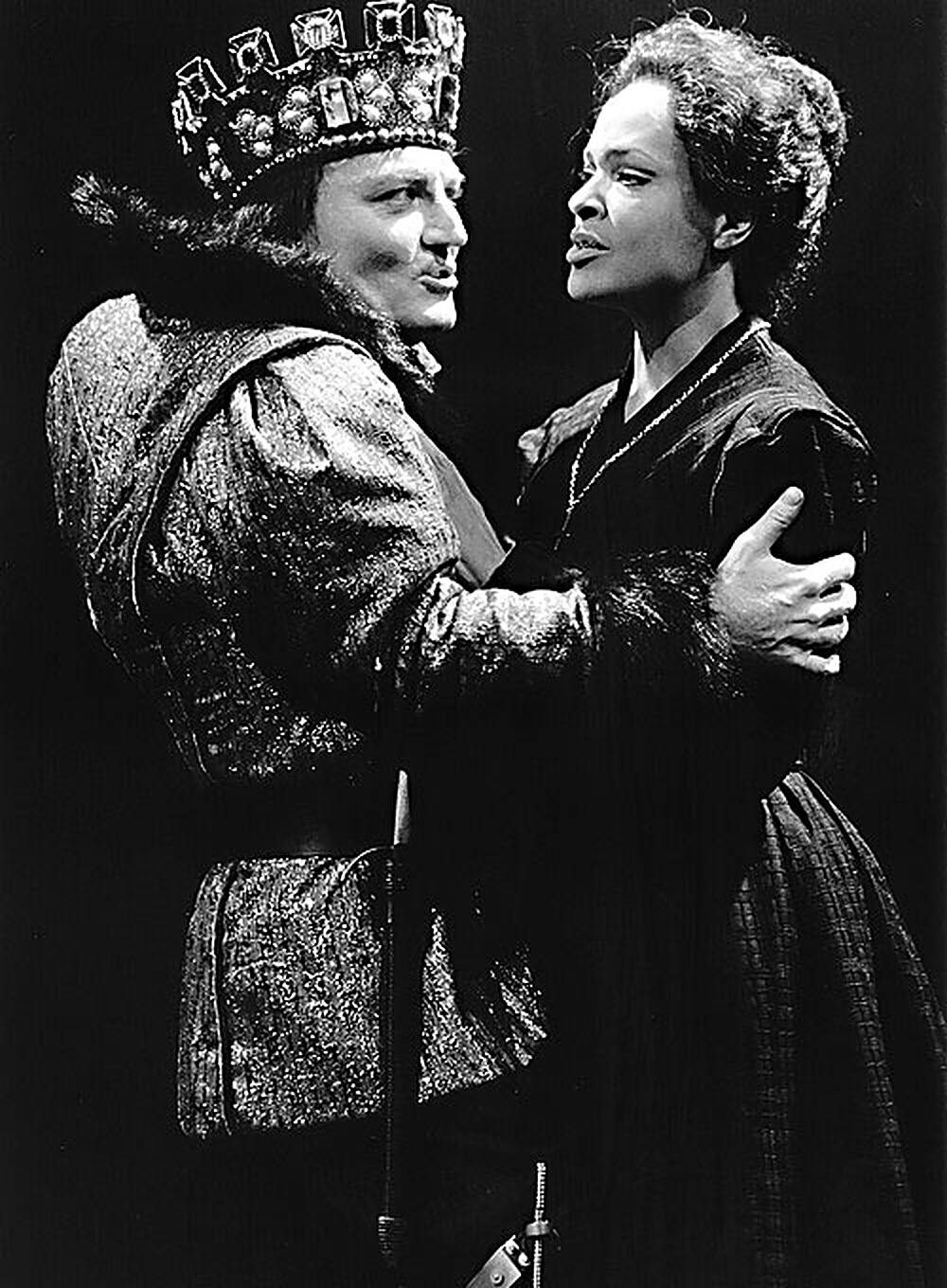
In 1990 he came to Washington to play Richard III for Michael Kahn, in the production that drew lines around the block for the company’s first open rehearsal (STC history). I played his brother Clarence (STC). I showed up to rehearsal in sweats, a baseball cap, and sneakers, and there he was in sweats, a baseball cap, and sneakers. Our wives were the same age. Our kids were the same age. We were both avid, terrible golfers. The man I had admired from a seat in the park turned out to be open, generous, and kind, and we became friends almost at once. At the end of the run, the company chipped in for a Boydell engraving of Richard III as a parting gift, and Stacy invited me to his house in Malibu.
Every Shakespeare role since
From then on, whenever Stacy took on Shakespeare, I seemed to be there. I was Banquo to his Macbeth. I was Gloucester to his King Lear, in Robert Falls’s production at the Goodman in 2006 and again at the Shakespeare Theatre in 2009. The Lear began with a phone call. We hadn’t seen each other for a few years when Stacy rang to ask whether I’d like to meet Robert Falls, the Goodman’s artistic director. Falls had asked him to recommend actors, and he named me (American Theatre). I asked to read Gloucester, and Bob cast me. In Chicago I talked the Goodman into giving me the apartment next to Stacy’s. “I’m the gentleman’s gentleman,” I told them. “I cook, he eats.” Every night after rehearsal we shared a meal and worked on the play into the small hours, each with his own copy of Marvin Rosenberg’s The Masks of King Lear.
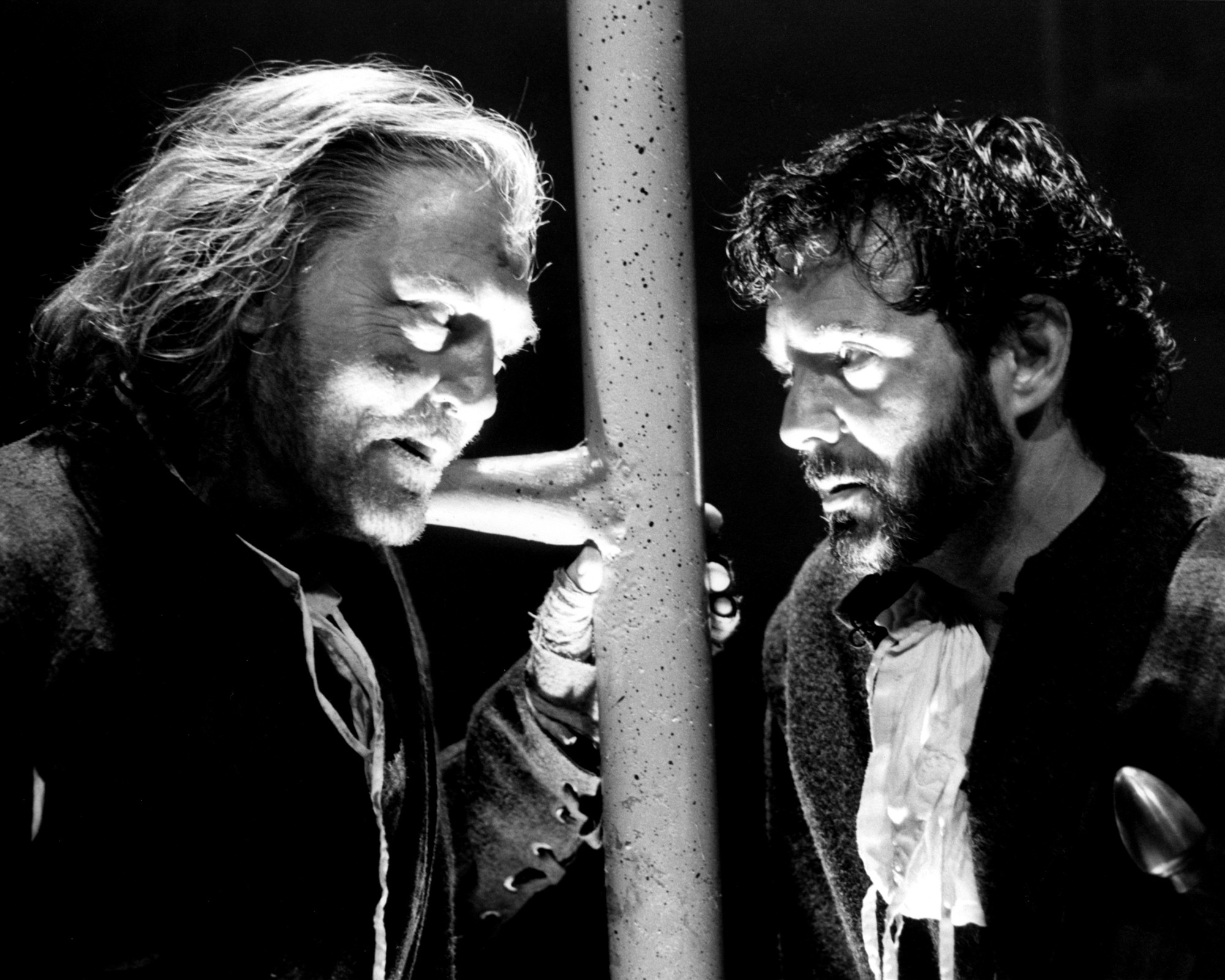
One night Stacy took me to Gibsons, the great Chicago steakhouse, where a table was waiting for him. Over dinner he described his idea for the first scene: the map of the kingdom as a birthday cake, with a big knife plunged into it before he carved the kingdom up and gave it away. Then the waiter brought dessert, a thick slab of key lime pie with a carving knife standing straight up in the middle. We just stared at it. “Well,” I said, “I guess the choice has been made. The universe has agreed.”
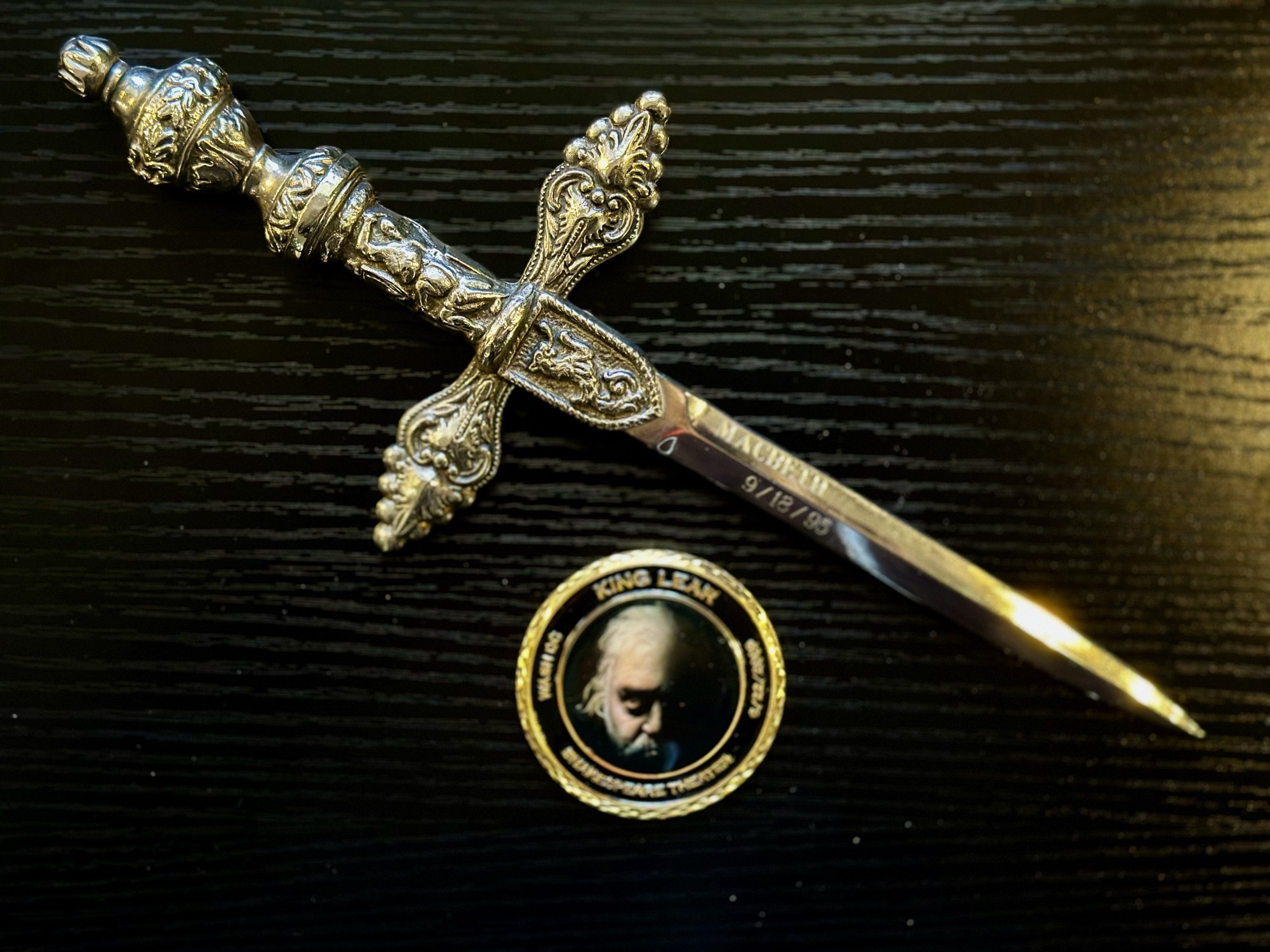
In every show we did together, Stacy had a special opening-night gift for the whole company. For Macbeth it was a dagger, engraved with the date. For King Lear it was a coin. I’ve carried on that tradition in the major shows I’ve done since.
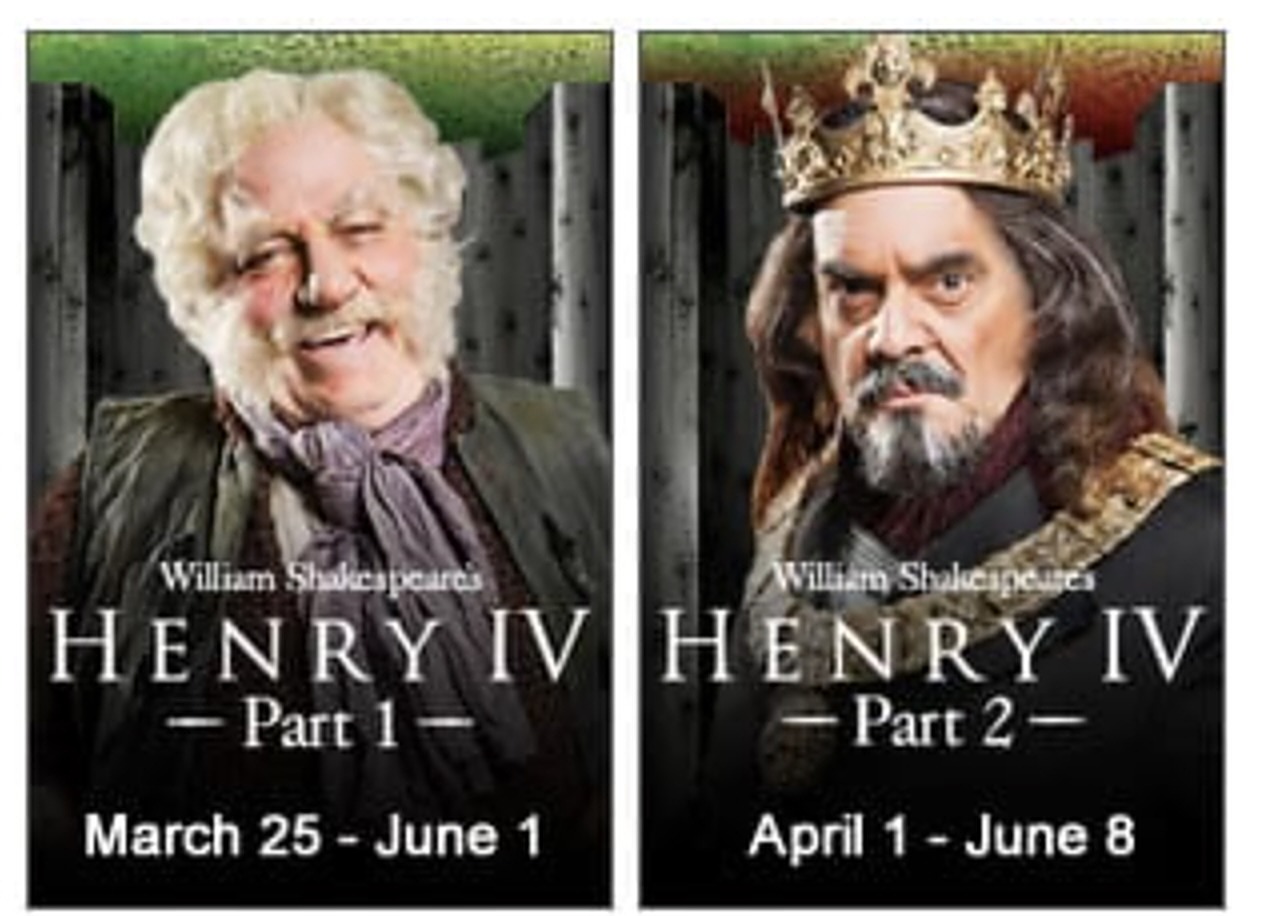
In 2014 I played Henry IV while he played Falstaff, a role he’d first played at twenty-seven and came back to at seventy-two (STC). In between there were holidays, Thanksgivings, hours on the putting green, phone calls and letters, and our children growing up side by side.
Two Nixons
Stacy came to see me in Nixon’s Nixon, and he loved it. A few years later he played Nixon himself in Frost/Nixon and took it on the road. When the Shakespeare Theatre asked which of each other’s performances we most admired, we both said “Nixon!” at the same moment (STC). Two different Nixons. It was one of the times I felt truly his equal.
And he was loyal in ways most people never saw. When I brought The Originalist to the Pasadena Playhouse in 2017 (Pasadena Playhouse), a mix-up led to Stacy being offered my role. He wrote to the theatre that he couldn’t do it, because it would hurt our friendship, and added that they should read the reviews: the guy was perfect for the part. When I walked into my dressing room in Pasadena, the only poster on the wall was Stacy Keach in Solitary Confinement. He taught me how to handle myself onstage, and he taught me how to handle a negotiation: honestly and straightforwardly.
What he taught me
Stacy taught me how to lead a company: by being the most prepared person in the room, by doing the research, by listening to your colleagues and being generous with them, and by always thinking about the next project. He knew how to put a career together out of the work itself. I watched him come to terms with the kind of movie stardom he once wanted and never quite had, and I watched him find something deeper in its place: satisfaction in the work. I didn’t know until recently how much of that I’d absorbed. This fall at the Guthrie, when I sat at the crew table and made pasta for the company, I was doing what Stacy did.
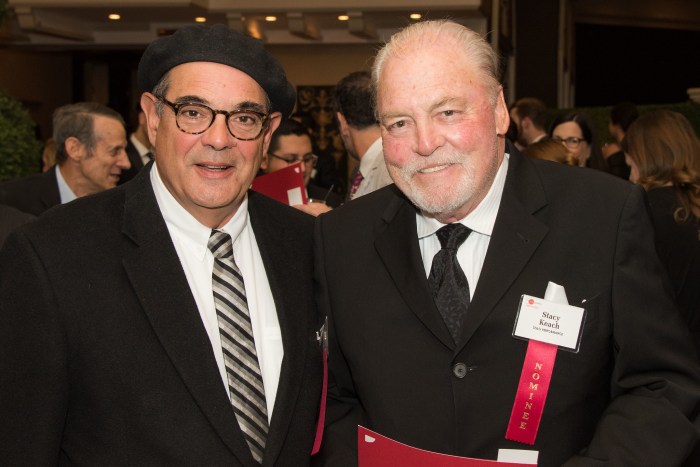
Stacy Keach. Nominated for Solo Performance for his portrayal of author Ernest Hemingway in Pamplona at Goodman Theatre. 2018
To the very end
A year ago I visited Stacy and his wife, Malgosia, in Poland. He was in a wheelchair, and I pushed him around to see FI in Warsaw. We talked about work. Of course we did. And we worked. His last project was ours: a podcast about Thomas Jefferson and John Adams, told in their own words, with Stacy as Jefferson and me as Adams. It is called Patriarchs. Like his father before him, Stacy worked right up to the end. He fought all the way.
He was my hero. Then he became my friend, and I became his. I could not have asked for a better companion in this art. The night he died, I posted Shakespeare’s Sonnet 73. I’ll close with its last lines, because they say what I feel better than I can:
This thou perceiv’st, which makes thy love more strong,
To love that well which thou must leave ere long.
Goodnight, Stacy.


Thank you for sending . Beautiful writing Kevin Sent from my iPhoneOn Nov 12, 2026,
LikeLiked by 1 person
Thank you, Ed, for sharing these beautiful memories. Since learning of Stacy’s death, I’ve been pondering what to write about it, while wandering through pictures of Macbeth. I love hearing about Stacy from his close friends and colleagues, but it’s interesting that those of us who knew him only as the star of our show still have very strong memories which we hold dear, and want to share. I think that’s the sign of a life well lived.
LikeLiked by 1 person