Goodnight, Sweet Prince: Remembering Stacy Keach

By Edward Gero

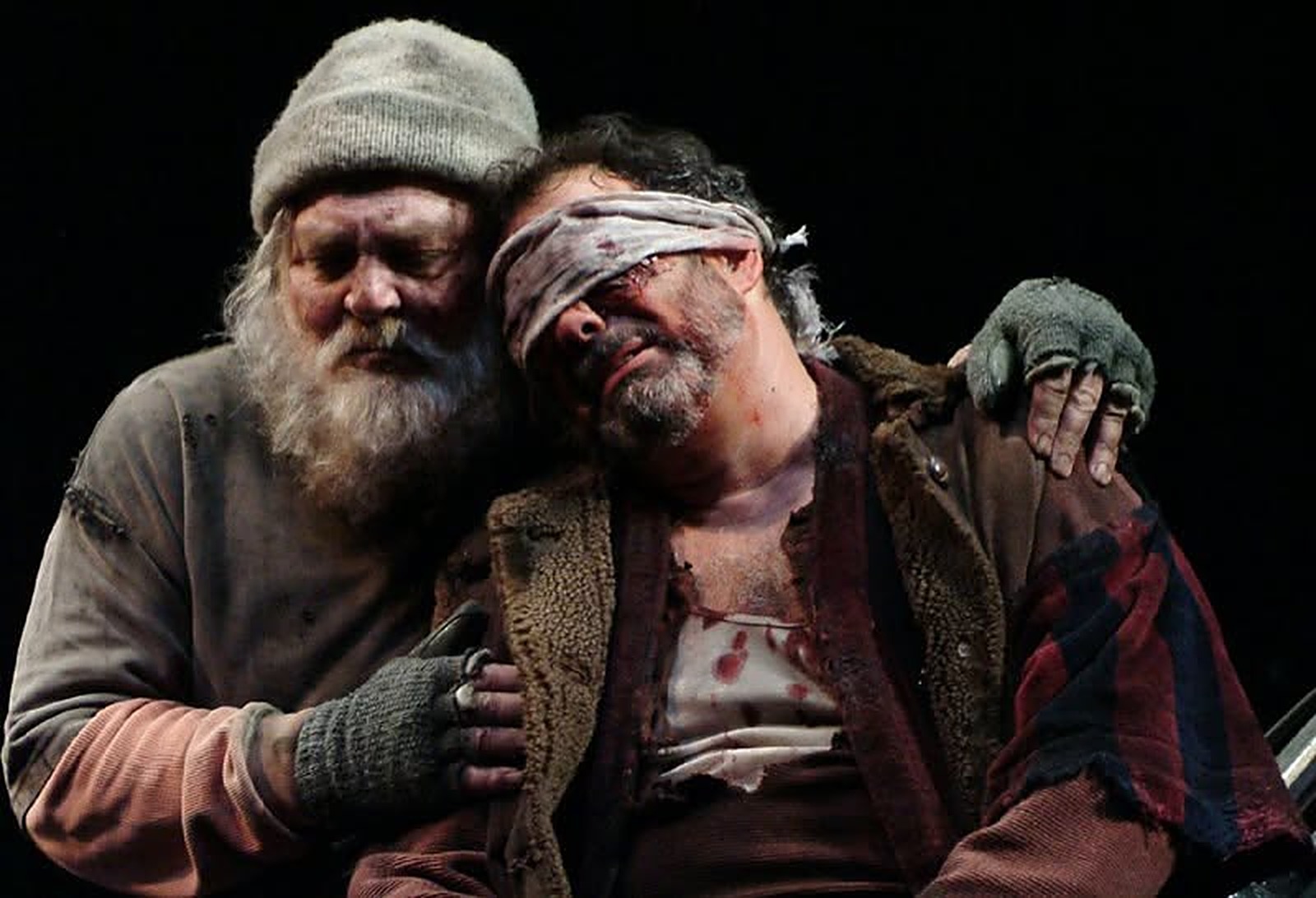
Stacy Keach as King Lear cradles Edward Gero as the blinded Gloucester, whose head rests against him
Stacy Keach as King Lear and Edward Gero as Gloucester, Goodman Theatre, Chicago, 2006. Courtesy of Goodman Theatre.

Why should a dog, a horse, a rat have life,
And thou no breath at all? Thou’lt come no more,
Never, never, never, never, never.

King Lear, Act 5, Scene 3

Stacy Keach died on Tuesday, November 10, at his home in Magdalenka, Poland, after a long battle with heart failure. He was 85. The New York Times remembers him as the actor who embodied both Hamlet and Mike Hammer. I remember him as my hero, and then, for more than thirty-five years, as my friend.

I heard the news from a friend in a message that said only “Condolences.” I knew. I spent the rest of the night posting, and gathering photographs, and reading what people were writing about him and sending their condolences to me. The cast of our King Lear found each other via texts within about fifteen minutes. The world is grieving him, and I’m grateful for that.

The first time I saw him

I owe the first sight of him to my high school drama teacher, Jim Albertson. Jim had already introduced me to Broadway with Ellis Rabb’s APA-Phoenix production of Hamlet. Then, in the summer of 1969, when I was fifteen, Jim said, “Let’s go to the Delacorte. Free theatre in the park. We’re going to see a play called Peer Gynt.” I thought, sure, let’s do this.

We got our tickets and sat on a park bench near the entrance at 81st Street and Central Park West, waiting to go in. It was summer, and beautiful. I looked up toward the theatre and saw a couple walking down the asphalt path, and I thought, oh my God. A woman with long brown hair and steel-blue eyes was walking toward me. “Jim, look,” I said. “It’s Judy Collins.” I had been listening to her records for years. She was one of the voices of my generation, and I was starstruck. Jim said, “No, no, no,” and pointed to the man beside her. “That’s Stacy Keach.”
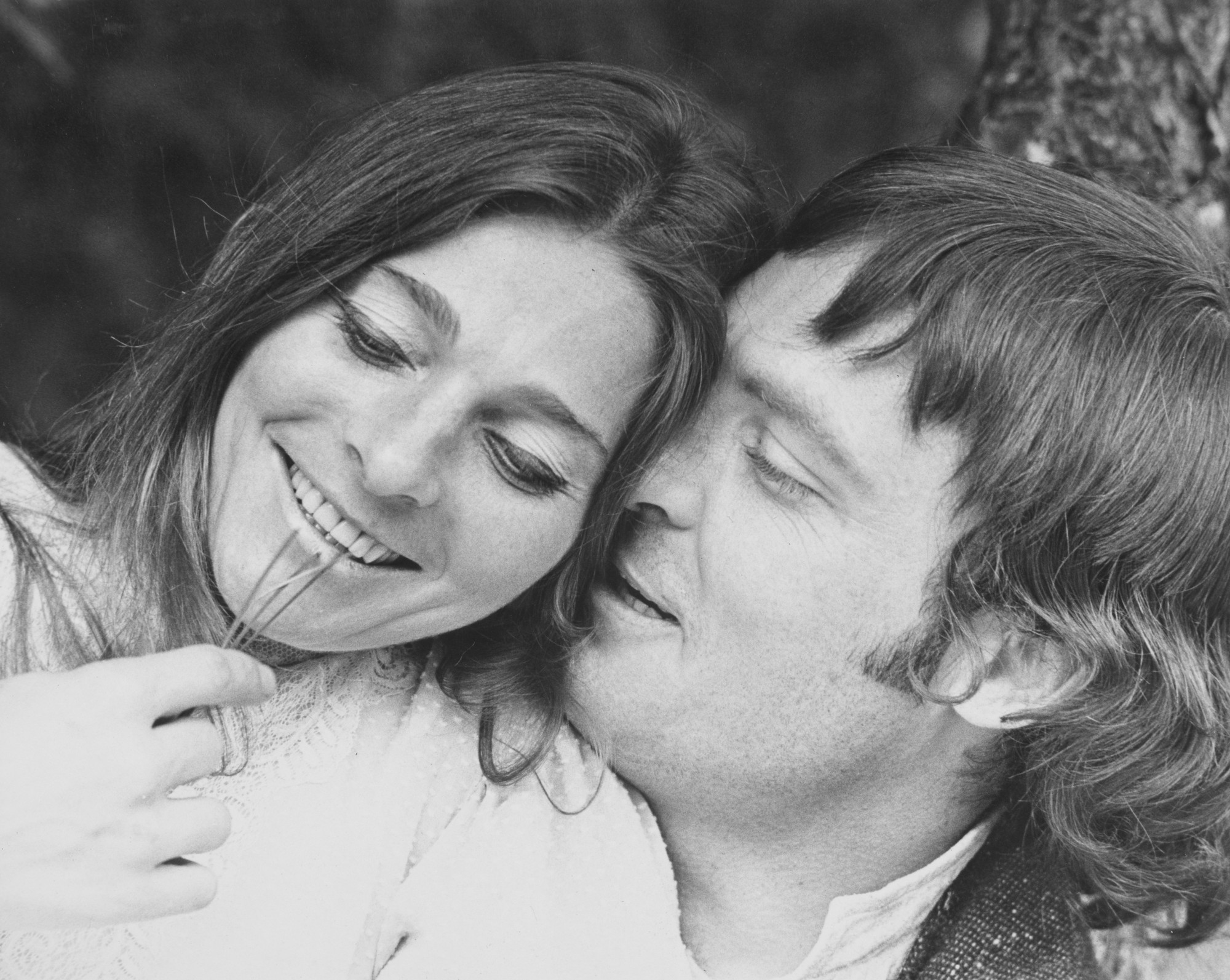
Judy Collins, smiling, cheek to cheek with Stacy Keach, in black and white
Judy Collins and Stacy Keach in Peer Gynt, New York Shakespeare Festival, 1969. Billy Rose Theatre Division, The New York Public Library.

Stacy was about to play Peer Gynt, and Judy Collins was playing Solveig. They were together at the time. As it turned out, a college pal of Jim’s, Joe Rose, was in the ensemble, and afterward we got to go backstage to meet him. It was the first time I saw Stacy perform, and he was physical, vibrant, and athletic.

What I remember most is one scene, staged on a set by the great Ming Cho Lee. On his travels, Peer is thrown overboard and finds himself in the middle of the ocean with a character called the Strange Passenger, who may be a figure for death. To stage it, Ming put the entire ensemble under an enormous sheet of blue Chinese silk. Underneath, they held Stacy and the Strange Passenger up by the hips and shoulders and moved their arms to make the sea billow, raising and lowering the two men and carrying them around the space (New York Times). When Peer reached shore, the ensemble gently lowered the two actors to the deck, and the silk was pulled off upstage center and down the stairs. It looked as if the whole ocean had drained away. It was a real coup de théâtre.

Nearly thirty years later, Michael Kahn directed Peer Gynt at the Shakespeare Theatre, with sets by Ming Cho Lee, and I was playing the Strange Passenger (STC). When we came to that scene, Michael asked, “How are we going to do this scene?” I told him the story of the great blue Chinese silk. “No, no, no,” Michael said. “We can’t do that. It’s already been done. I can’t do that again. Get Ming in here,” he barked. Ming, who was very soft-spoken, came in, and Michael asked him how we were going to do the scene. Ming said, “Well, Michael, when I did the play at the Delacorte, we used this blue Chinese silk.” Michael cut him off: “Yes, yes, I know, I know. Let’s do that.” Without any acknowledgment to me. But even that was a full-circle moment: the scene that had stayed with me since that first night, and now I was in it.

The actor I wanted to be

Three summers after Peer Gynt, in 1972, when I was seventeen and just out of high school, I saw Stacy play Hamlet at the Delacorte Theater in Central Park, with James Earl Jones and Colleen Dewhurst in the company (Shakespeare Theatre Company). I went home wanting to be like him. That night set me on the road to a life in the classical theatre.
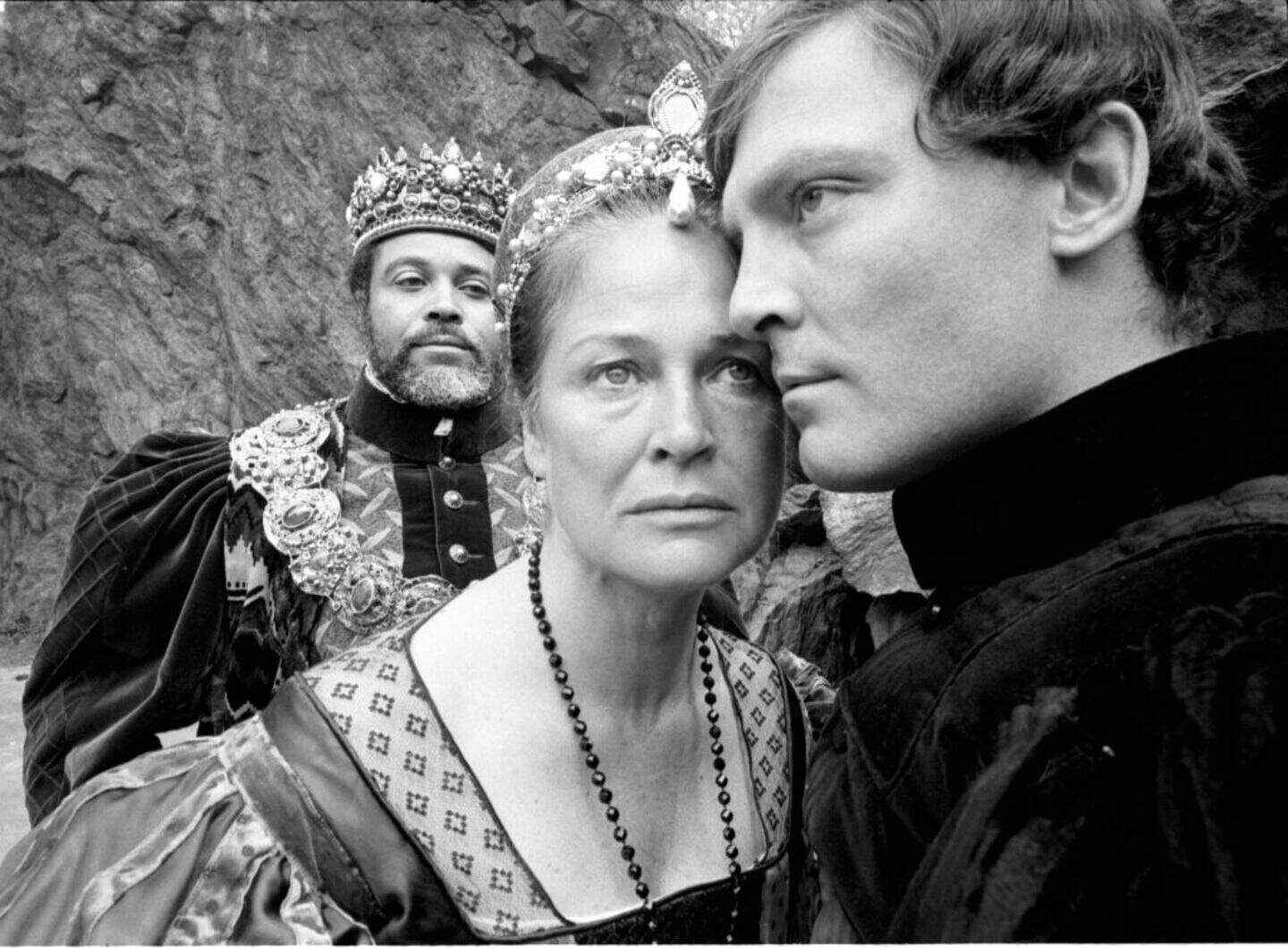
James Earl Jones as the crowned Claudius stands behind Colleen Dewhurst as Gertrude and Stacy Keach as Hamlet in profile, in black and white
James Earl Jones as Claudius, Colleen Dewhurst as Gertrude, and Stacy Keach as Hamlet in Joseph Papp’s New York Shakespeare Festival production of Hamlet, Central Park, June 1972. © Getty Images.

In 1990 he came to Washington to play Richard III for Michael Kahn, in the production that drew lines around the block for the company’s first open rehearsal (STC history). I played his brother Clarence (STC). I showed up to rehearsal in sweats, a baseball cap, and sneakers, and there he was in sweats, a baseball cap, and sneakers. Our wives were the same age. Our kids were the same age. We were both avid, terrible golfers. The man I had admired from a seat in the park turned out to be open, generous, and kind, and we became friends almost at once. At the end of the run, the company chipped in for a Boydell engraving of Richard III as a parting gift, and Stacy invited me to his house in Malibu.
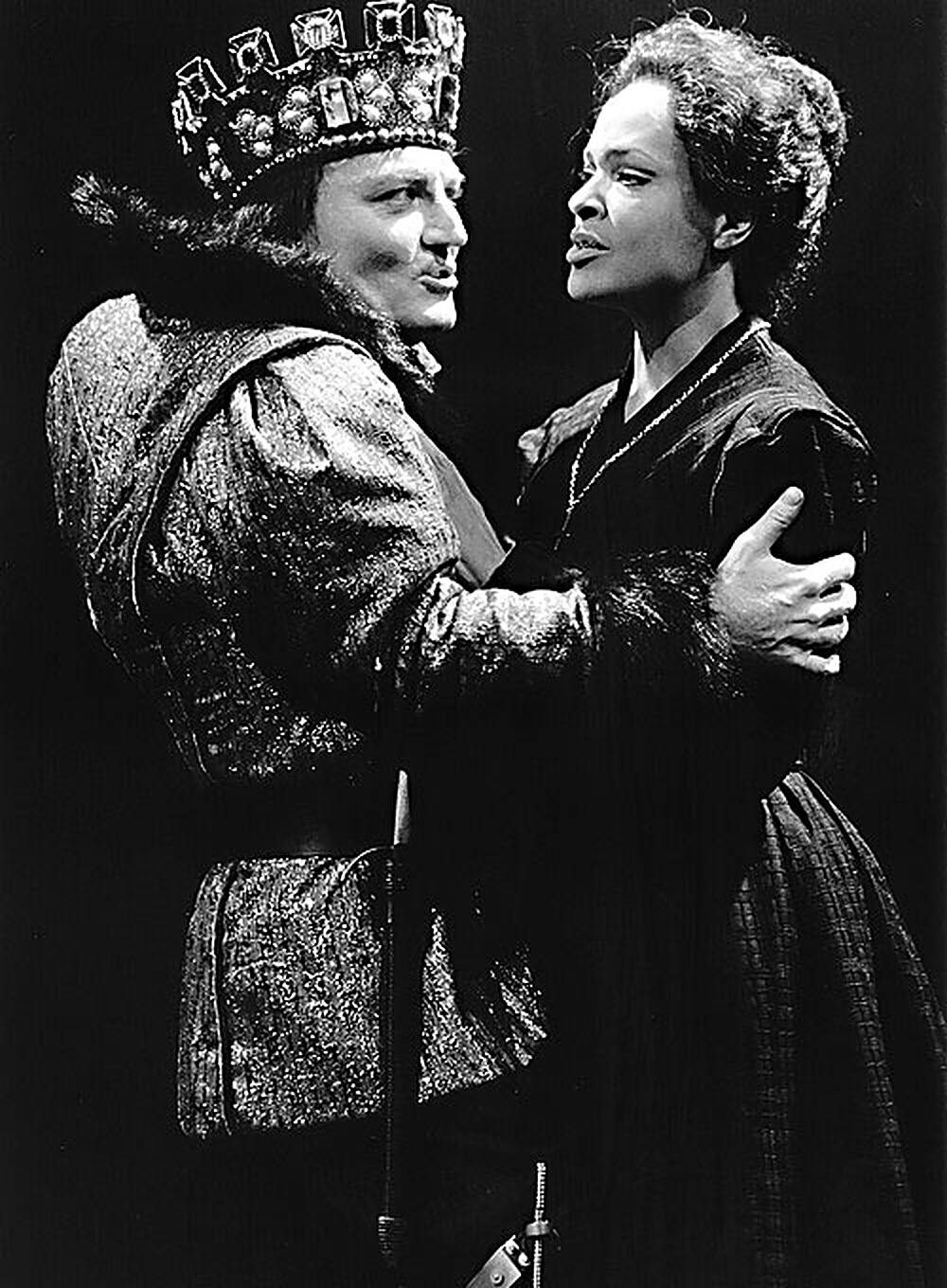
Stacy Keach as Richard III, crowned, embracing Franchelle Stewart, in black and white
Stacy Keach and Franchelle Stewart in Richard III at the Shakespeare Theatre, Folger Shakespeare Library, Washington, D.C., 1990. Photo by Joan Marcus.

Every Shakespeare role since

From then on, whenever Stacy took on Shakespeare, I seemed to be there. I was Banquo to his Macbeth. I was Gloucester to his King Lear, in Robert Falls’s production at the Goodman in 2006 and again at the Shakespeare Theatre in 2009. The Lear began with a phone call. We hadn’t seen each other for a few years when Stacy rang to ask whether I’d like to meet Robert Falls, the Goodman’s artistic director. Falls had asked him to recommend actors, and he named me (American Theatre). I asked to read Gloucester, and Bob cast me. In Chicago I talked the Goodman into giving me the apartment next to Stacy’s. “I’m the gentleman’s gentleman,” I told them. “I cook, he eats.” Every night after rehearsal we shared a meal and worked on the play into the small hours, each with his own copy of Marvin Rosenberg’s The Masks of King Lear.
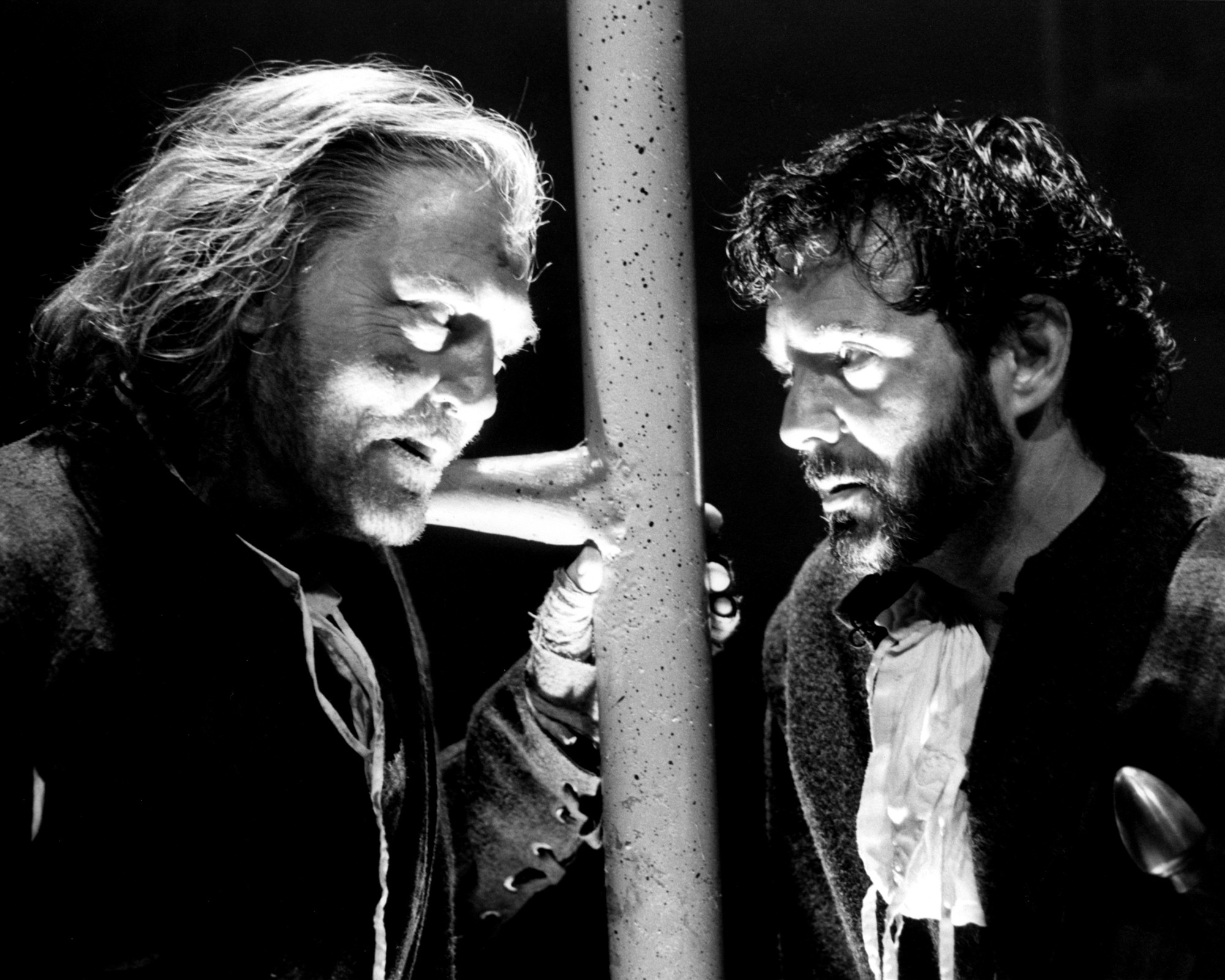
Stacy Keach as Macbeth and Edward Gero as Banquo face each other across a pillar, in black and white
Stacy Keach as Macbeth (left) and Edward Gero as Banquo, Shakespeare Theatre Company, 1995. Courtesy of Shakespeare Theatre Company.

One night Stacy took me to Gibsons, the great Chicago steakhouse, where a table was waiting for him. Over dinner he described his idea for the first scene: the map of the kingdom as a birthday cake, with a big knife plunged into it before he carved the kingdom up and gave it away. Then the waiter brought dessert, a thick slab of key lime pie with a carving knife standing straight up in the middle. We just stared at it. “Well,” I said, “I guess the choice has been made. The universe has agreed.”

In every show we did together, Stacy had a special opening-night gift for the whole company. For Macbeth it was a dagger, engraved with the date. For King Lear it was a coin. I’ve carried on that tradition in the major shows I’ve done since.
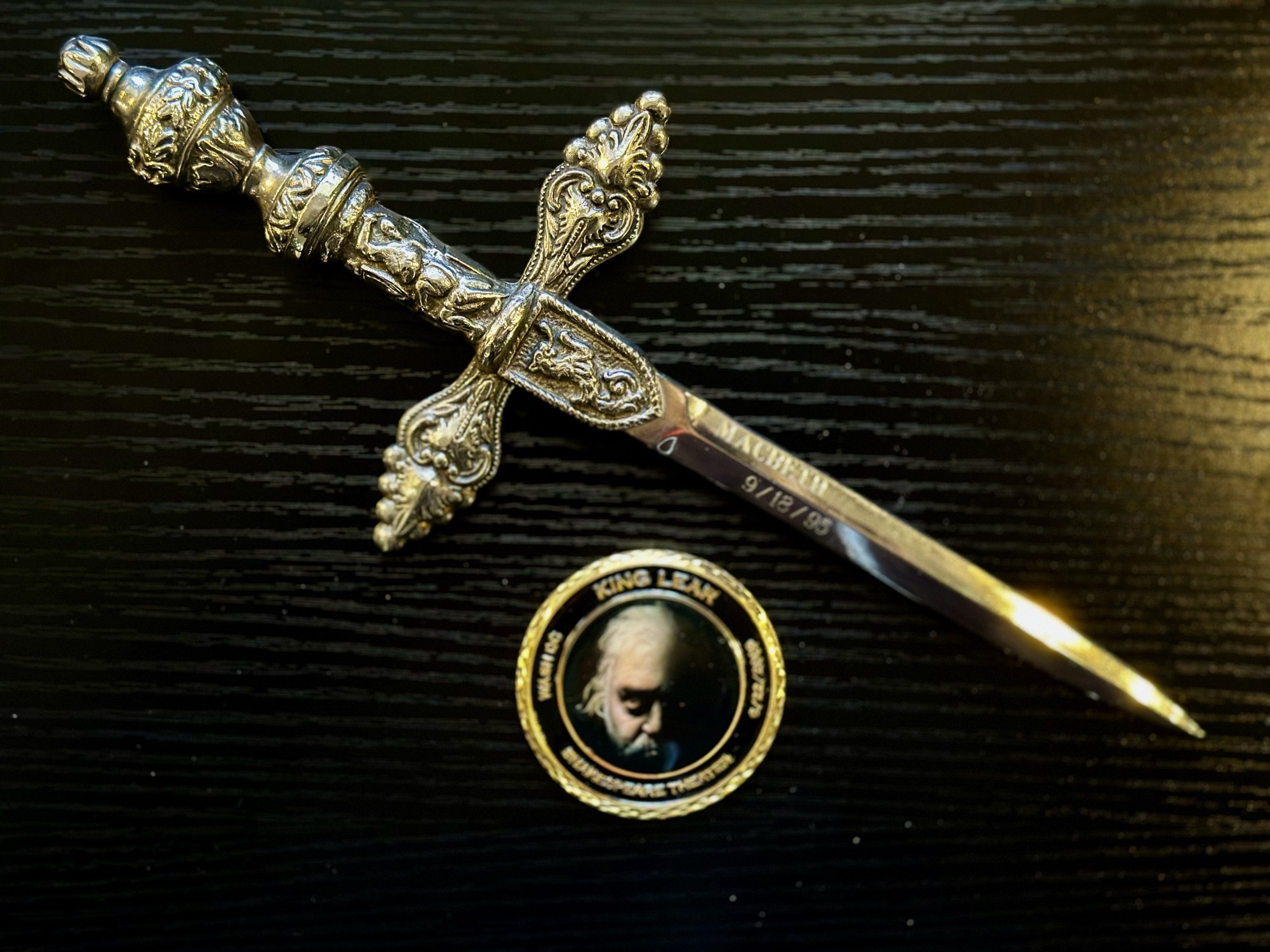
An ornate silver dagger engraved Macbeth 9/18/95 beside a gold-rimmed King Lear coin bearing Stacy Keach's face
Stacy’s opening-night gifts to the company: a dagger engraved for Macbeth, 9/18/95, and a King Lear coin from the Shakespeare Theatre in Washington. Photo by Edward Gero.

In 2014 I played Henry IV while he played Falstaff, a role he’d first played at twenty-seven and came back to at seventy-two (STC). In between there were holidays, Thanksgivings, hours on the putting green, phone calls and letters, and our children growing up side by side.
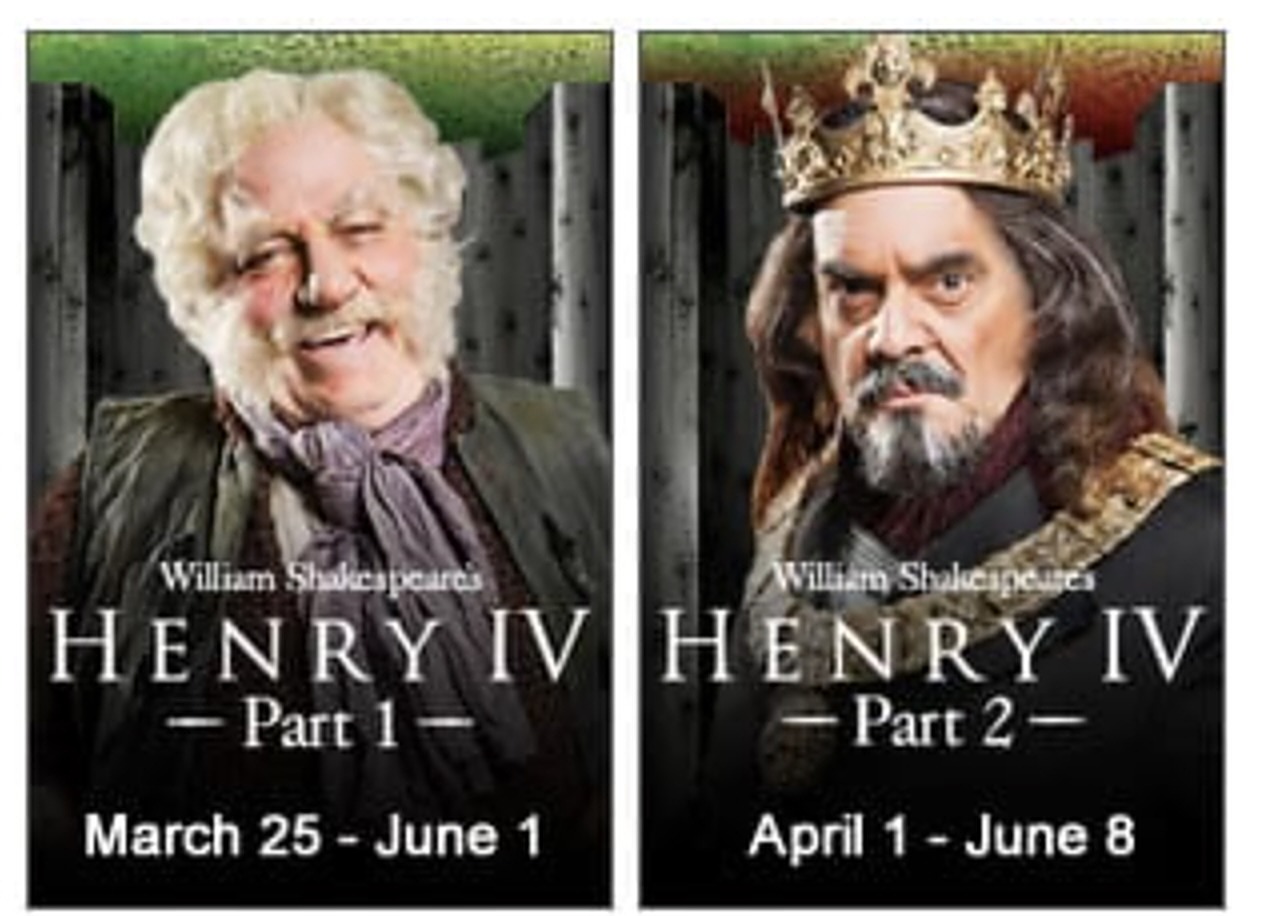
Side-by-side posters for Henry IV, Part 1, with Stacy Keach as Falstaff, and Part 2, with Edward Gero as the crowned King Henry
Stacy Keach as Falstaff and Edward Gero as King Henry in Henry IV, Parts 1 and 2, Shakespeare Theatre Company, 2014. Courtesy of Shakespeare Theatre Company.

Two Nixons

Stacy came to see me in Nixon’s Nixon, and he loved it. A few years later he played Nixon himself in Frost/Nixon and took it on the road. When the Shakespeare Theatre asked which of each other’s performances we most admired, we both said “Nixon!” at the same moment (STC). Two different Nixons. It was one of the times I felt truly his equal.

And he was loyal in ways most people never saw. When I brought The Originalist to the Pasadena Playhouse in 2017 (Pasadena Playhouse), a mix-up led to Stacy being offered my role. He wrote to the theatre that he couldn’t do it, because it would hurt our friendship, and added that they should read the reviews: the guy was perfect for the part. When I walked into my dressing room in Pasadena, the only poster on the wall was Stacy Keach in Solitary Confinement. He taught me how to handle myself onstage, and he taught me how to handle a negotiation: honestly and straightforwardly.

What he taught me

Stacy taught me how to lead a company: by being the most prepared person in the room, by doing the research, by listening to your colleagues and being generous with them, and by always thinking about the next project. He knew how to put a career together out of the work itself. I watched him come to terms with the kind of movie stardom he once wanted and never quite had, and I watched him find something deeper in its place: satisfaction in the work. I didn’t know until recently how much of that I’d absorbed. This fall at the Guthrie, when I sat at the crew table and made pasta for the company, I was doing what Stacy did.
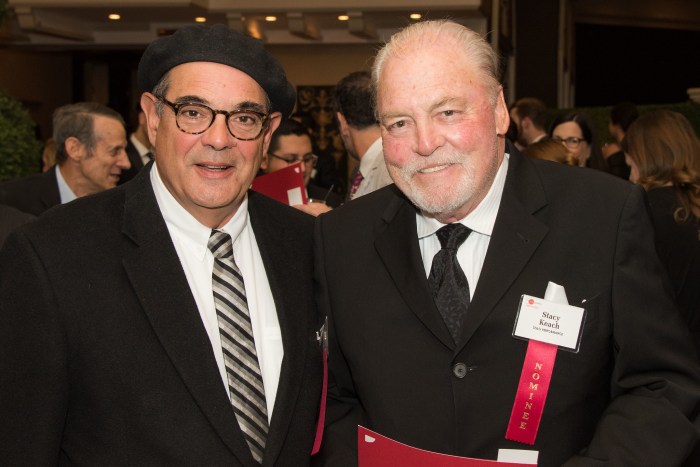
Edward Gero. Nominated for Performer in a Principal Role – Play for his portrayal of U.S. Supreme Court Justice Antonin Scalia in The Originalist at Court Theatre.
Stacy Keach. Nominated for Solo Performance for his portrayal of author Ernest Hemingway in Pamplona at Goodman Theatre. 2018

To the very end

A year ago I visited Stacy and his wife, Malgosia, in Poland. He was in a wheelchair, and I pushed him around to see FI in Warsaw. We talked about work. Of course we did. And we worked. His last project was ours: a podcast about Thomas Jefferson and John Adams, told in their own words, with Stacy as Jefferson and me as Adams. It is called Patriarchs. Like his father before him, Stacy worked right up to the end. He fought all the way.

He was my hero. Then he became my friend, and I became his. I could not have asked for a better companion in this art. The night he died, I posted Shakespeare’s Sonnet 73. I’ll close with its last lines, because they say what I feel better than I can:

This thou perceiv’st, which makes thy love more strong,
To love that well which thou must leave ere long.

Goodnight, Stacy.
Slideshow: King Lear at the Goodman Theatre, Chicago, 2006.

Returning to Jack: Kunene and the King at the Guthrie

By Edward Gero

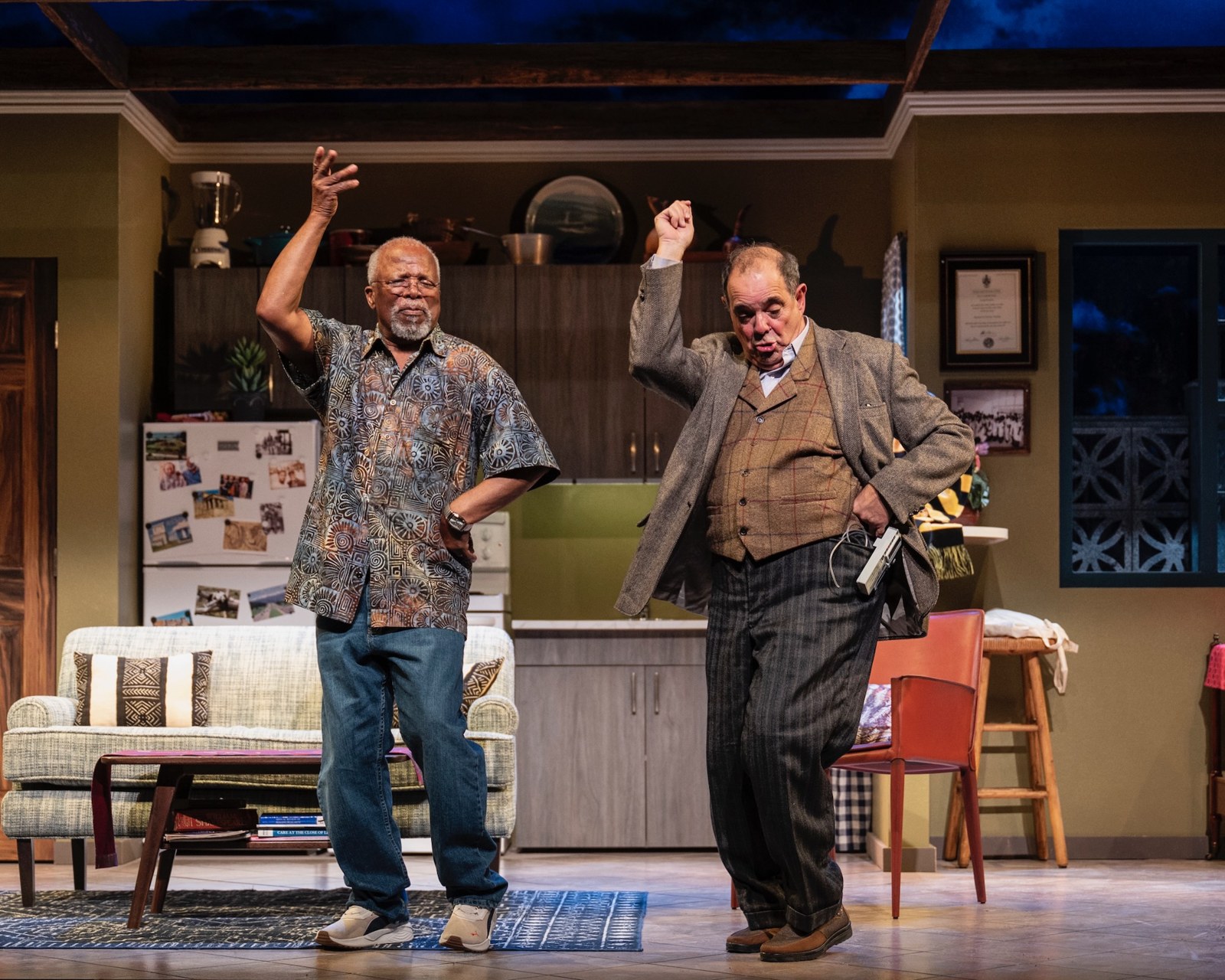
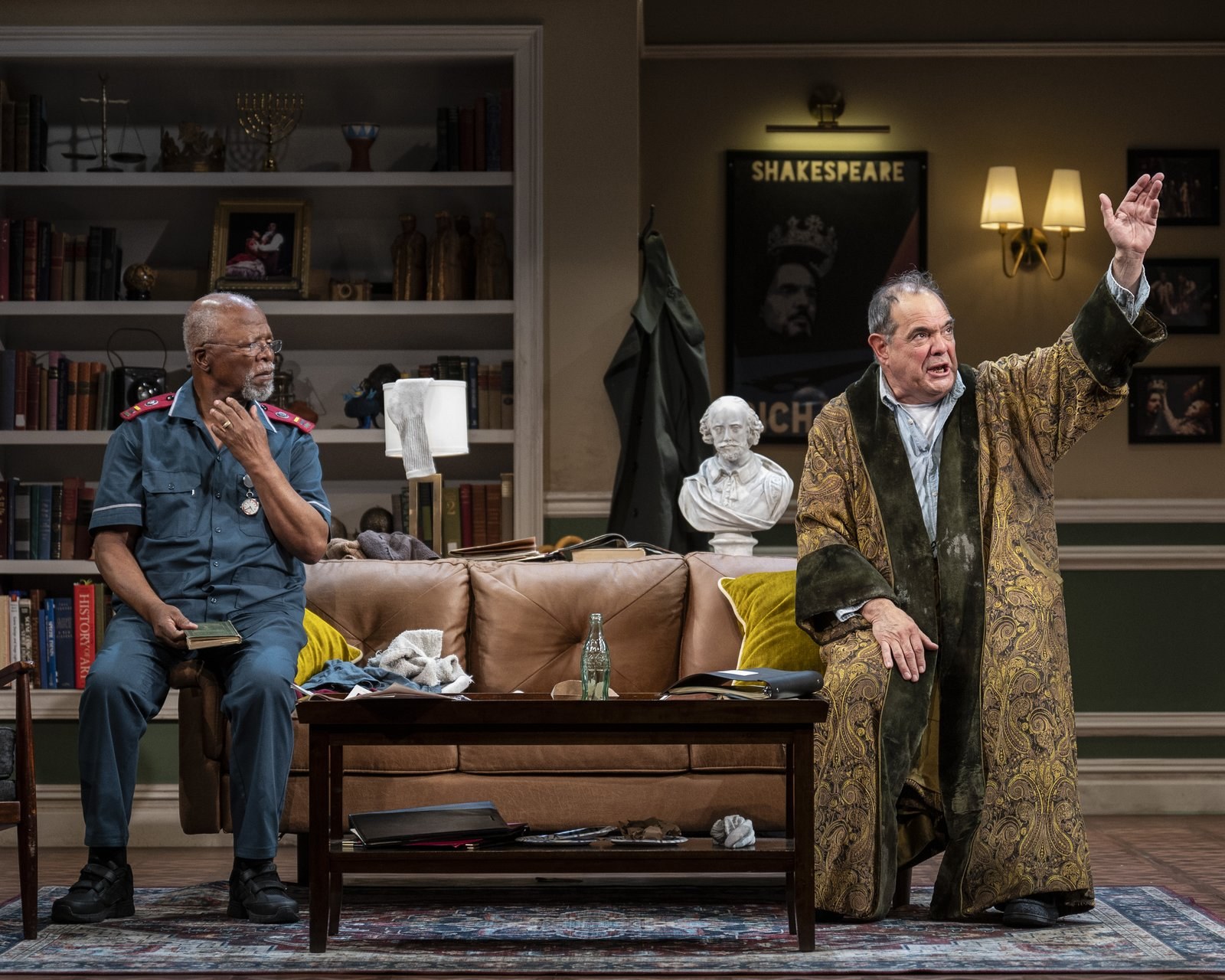
Edward Gero as Jack Morris, arm raised mid-speech, with John Kani as Lunga Kunene seated on the sofa
Edward Gero as Jack Morris and John Kani as Lunga Kunene in Kunene and the King. Photo: Teresa Castracane Photography.

Two years ago I lived in an apartment building a few blocks from the Guthrie while I was doing The Lehman Trilogy. This fall I came back to the same building, to the same layout, just two floors up. Some things were familiar. The man arriving was not quite the same one.

I came straight from a long summer in Italy, where the days were slower and I had time to think. The week in between was a flat stone skipping across a pond: packing, shipping, a few readings, some goodbyes, and then another plane. Then I walked into a rehearsal room and got a hug from John Kani.

(Some passages below come from the interview I gave the Guthrie for opening. You can read the full Guthrie Q&A on the Guthrie’s website.)

Back in the room

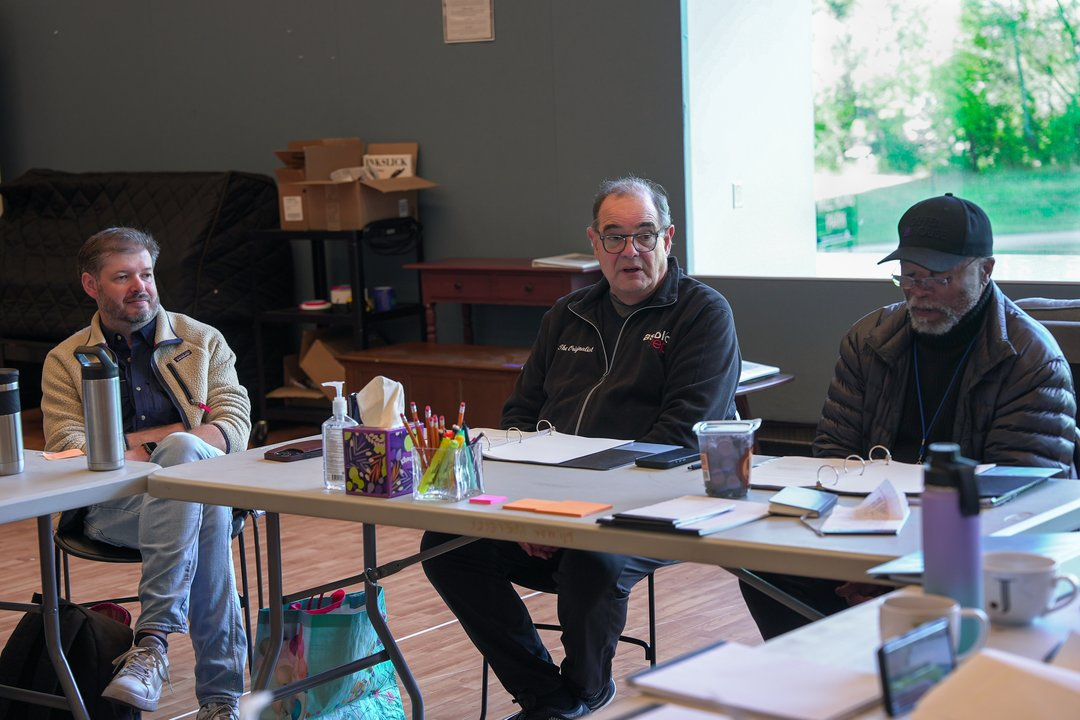
The first day of rehearsal was a celebration. John, Ntebo, our director Ruben Santiago-Hudson, and our two understudies, John Lescault and Peter Callender, were all back together. Before the crowds arrived we had a little time to ourselves to catch up. Then the whole Guthrie staff filled the room, and John spoke about where the play comes from and why it mattered to bring it here. I’ve watched him do this many times. He catches people with a bit of humor, then becomes very open and speaks straight to them. It isn’t technique. It’s real connection, and he has an extraordinary gift for it.

Edward Gero and John Kani at the first read-through of Kunene and the King
The first read-through at the Guthrie. Photo: Guthrie Theater (Joshua Cummins and Bonnie Young).
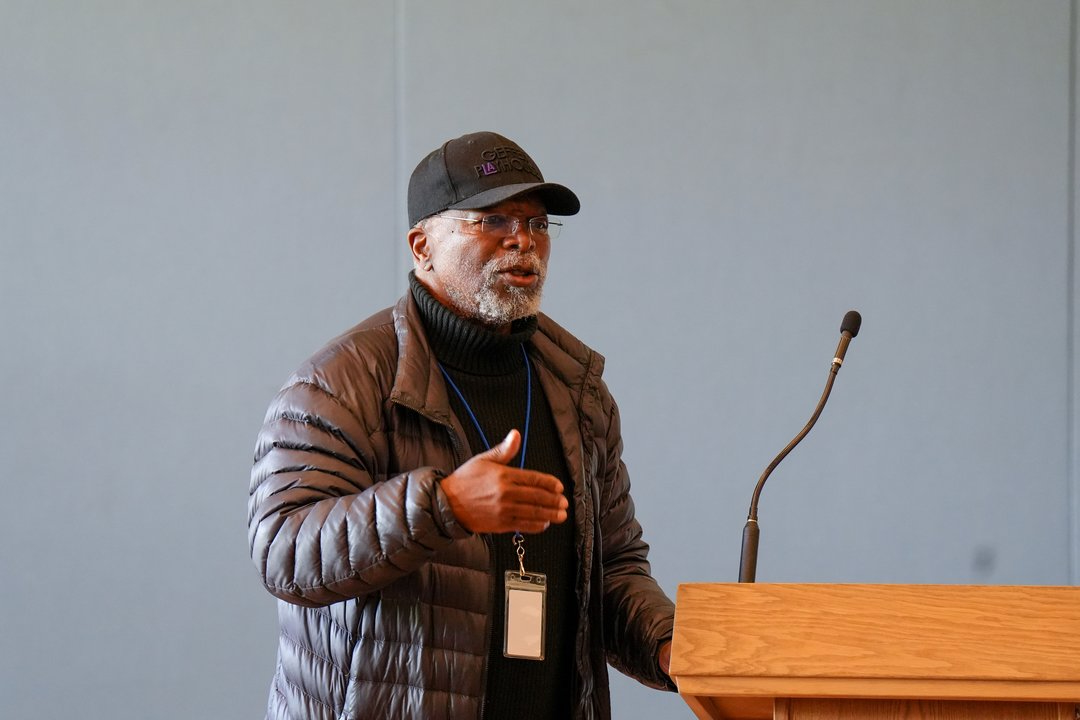
John Kani speaks to the Guthrie company and staff on the first day of rehearsal
John Kani speaks to the company on the first day. Photo: Guthrie Theater (Joshua Cummins and Bonnie Young).

This play is John’s brainchild, and he has played Lunga throughout its life, beginning opposite Antony Sher at Stratford. As I told the Guthrie, “I’m his third distinct acting partner in this role, yet he approached our work with a beginner’s mind. Rather than expecting me to fit into something already established, he welcomed my own experience and allowed us to discover Jack and Lunga’s relationship together.”

Ruben made that possible too. “He created a rehearsal room in which John and I could explore freely,” I said. “You can bring everything you know to the work, but you can also admit what you don’t know, try something and risk being wrong.”

Then we read the play, and I heard it again. That was exciting. It was also a reminder of how much work was in front of us.

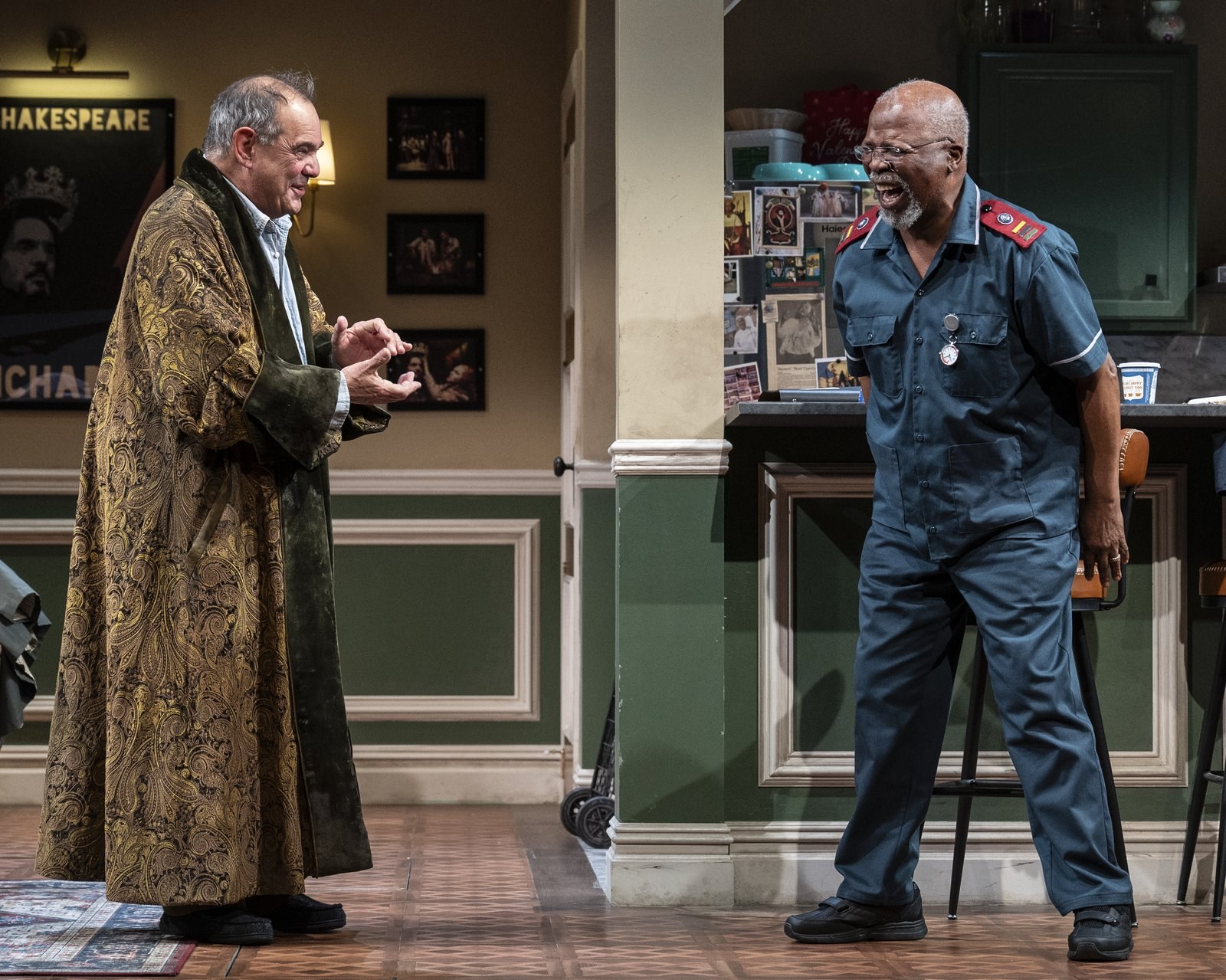
Jack Morris in a gold dressing gown faces Lunga Kunene in his nurse's uniform
Jack meets the caregiver he wasn’t expecting. Edward Gero and John Kani. Photo: Teresa Castracane Photography.

Remembering before changing

A remount is a strange kind of rehearsal. You aren’t starting from nothing, and you aren’t simply repeating what you did. My own process is that I need to remember where we were before I can change anything. Until I can recall what a moment was, I don’t really understand what a change will do to the story. So for the first week my brain was busy chasing the old flow and the old specifics while new information kept coming in.

The stage was also a little different. The set had been made lighter and smaller so it could travel, and the playing space was tighter. Not all the props had arrived, so we invented some and had to adjust to others. I’m grateful to John Lescault, who remembered details for me that I had lost.

There are physical moments I was determined to protect, because they set up the comedy and tell the story of the relationship. John is freer in his movement, and he would sometimes wander from what I remembered. Once we talked it through, he’d find his own way into it and make it his. Our associate director, Tim Johnson, checked the video of the Washington production for us, which settled more than one question gracefully.

One small discovery stays with me. There’s a speech about forgetting lines that seemed to want a quick, bright tempo. I slowed it down, and it got better. It isn’t a moment for showing off. It’s just telling the story and leaving it at that.

Recovering the old performance was only half the job. “I want to listen even more closely to John and see what we discover this time,” I told the Guthrie, “rather than simply reproduce what we found before.”

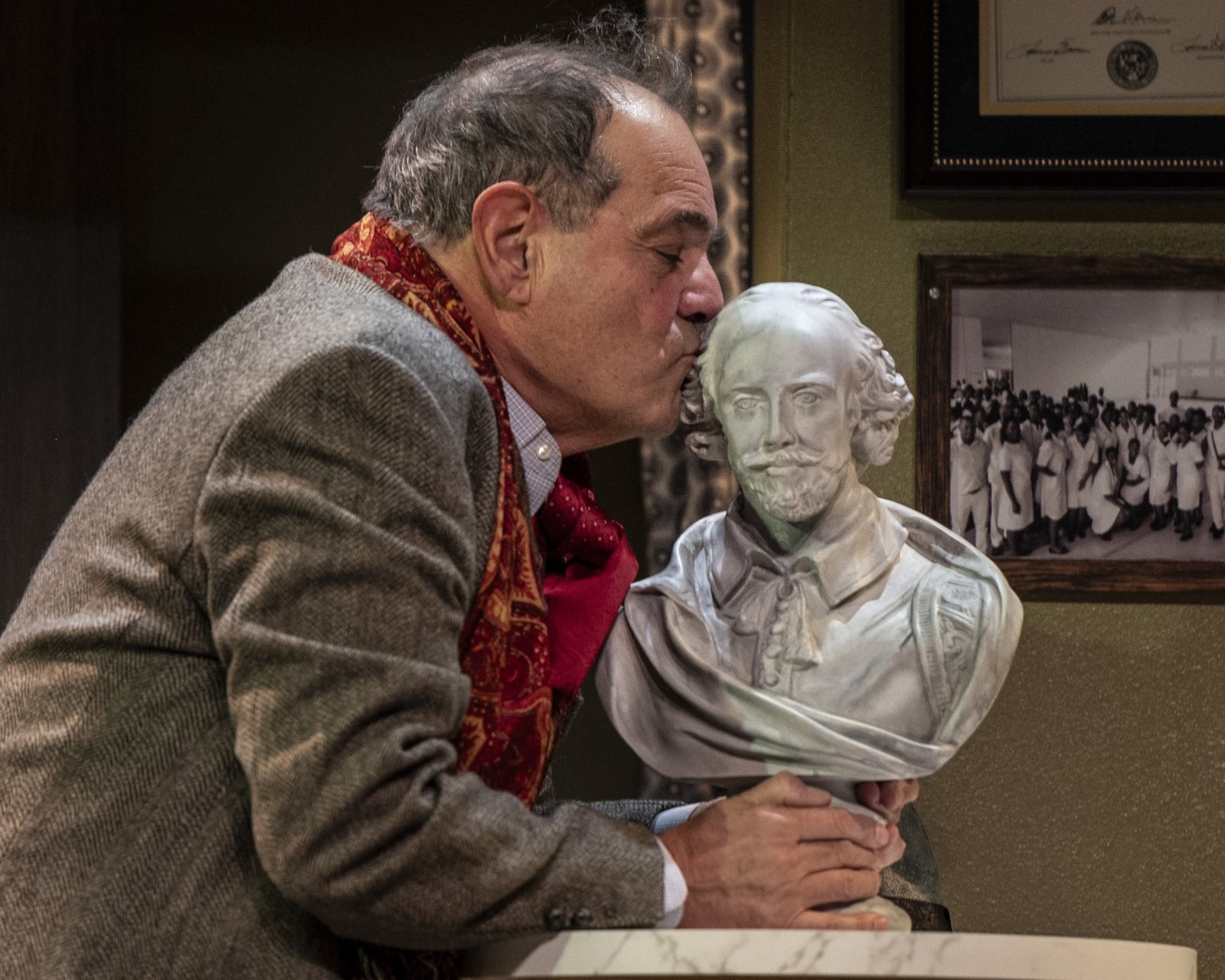
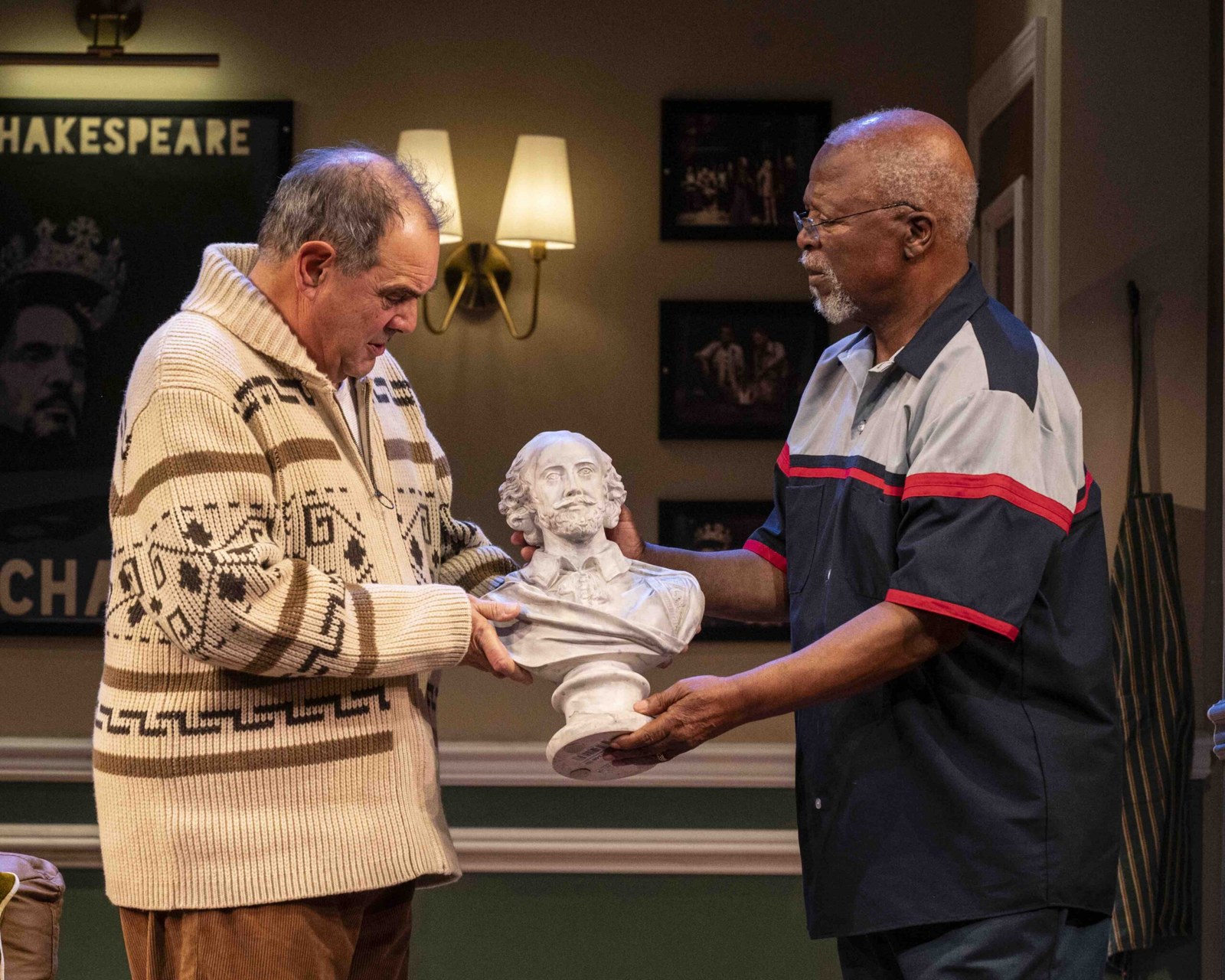
Jack Morris presses his cheek to a bust of Shakespeare
Jack and the Bard. Edward Gero as Jack Morris. Photo: Teresa Castracane Photography.

Depth instead of breadth

The last time I was at the Guthrie I played some thirty characters over three hours in The Lehman Trilogy. This time I stay with one man for about an hour and forty minutes: Jack Morris, a celebrated South African classical actor who has just been offered King Lear and, at almost the same moment, been told he is dying.

“That doesn’t make it less demanding,” I told the Guthrie. “Jack’s physical deterioration, his fear, his resistance to dependence and his need to preserve some sense of himself all need to coexist together. The challenge is to allow those things to unfold without getting ahead of him or deciding too quickly who he is. In Lehman, I needed to make the shifts between characters legible. Here, I’m exploring the shifts within a single person.”

The role is also very physical. In tech we drilled the big transition between the second and third scenes over and over: a heavy set moved by hand, a quick change, and me in my undergarments in a cold theater, screaming through Jack’s attack for as long as it took the crew to get it right. We did ten-hour days. Everyone kept their good humor, and I learned to mark the screaming so I’d still have a voice for opening.

Real food that real people eat

The crew carried us through tech, and I like to say thank you in the language I know best. I brought in sausage and peppers and announced it with a line of Jack’s: “real food that real people eat.” John, Ntebo, and I sat backstage and ate it warmed up in the production kitchen. Banana bread came later, and more recently a pot of white chicken chili that I shared with John and Ntebo. It’s a small thing, but it’s mine.

Jack Morris hands Lunga Kunene a bust of Shakespeare
The gift. Edward Gero and John Kani. Photo: Teresa Castracane Photography.

The first audience

Before the first preview I felt the old familiar resistance. I had a funny buzz in my body and a warmth around my ears, and part of me wondered whether, without the charge the first production carried for me, it would feel like just a job. I decided that was all right. It is a job, and I trusted it to deliver.

It did. The audience was with us from the beginning. The laughs came back, they listened with rapt attention, and they rose at the end. I walked out completely energized.

Alive onstage

John has told me he wants a performance to be alive. He wants to know that something might go wrong.

One night during previews, something did. There was a long silence where John’s line should have been, and I picked up the thread and kept us moving. (It turned out something had caught in his throat.) Later, my character’s cellphone wasn’t in my jacket pocket when Jack needed it for the photographs, so I asked John’s character for a camera and he took it from there. We looked after each other that night. That trust is the real foundation under everything we’ve rehearsed.

Lunga Kunene stands over Jack Morris, who sits wrapped in his dressing gown
Edward Gero and John Kani. Photo: Teresa Castracane Photography.

An encounter, not a resolution

Jack and Lunga find each other through Shakespeare, but they come to him from very different directions. Jack has spent his life with the Bard. Lunga first met him at school, in Julius Caesar, in isiXhosa. “They can discuss Lear before they’re ready to discuss themselves,” I said in the interview. “Jack knows the words; Lunga helps him confront what they might actually mean.”

Their affection never makes their differences disappear. “Their relationship isn’t a steady progression from suspicion to friendship,” I said. “It’s much less tidy than that.”

I think of John as an ambassador of reconciliation. Given everything he has endured, I’ve been struck by how little bitterness I’ve ever found in him. I once asked him how he had managed it. He said, “I got tired of being angry.” That has stayed with me.

“I don’t know that theater alone can reconcile people,” I told the Guthrie. “But it can create the conditions for an encounter: a chance to listen, to recognize someone we might otherwise keep at a distance and perhaps to question our own certainty.”

What the critics are saying

We opened on October 15, and the response has been wonderful.

  • “Both Kani and Gero give monumental performances.” (Arthur Dorman, Talkin’ Broadway)
  • “Gero and Kani are fearless together.” (Rohan Preston, Minnesota Star Tribune)
  • “A charismatic, consistently scene-stealing portrayal.” (Rob Hubbard, Pioneer Press)
  • “Two-handers are my favorite kind of play, and these two actors are simply divine.” (Jill Schafer, Cherry and Spoon)
  • “Jack Morris, brought to life with intense emotion and fervor by Edward Gero.” (Joe Sarafolean, BroadwayWorld)

Every one of these reviews names both of us, which is exactly as it should be. This play is a duet.

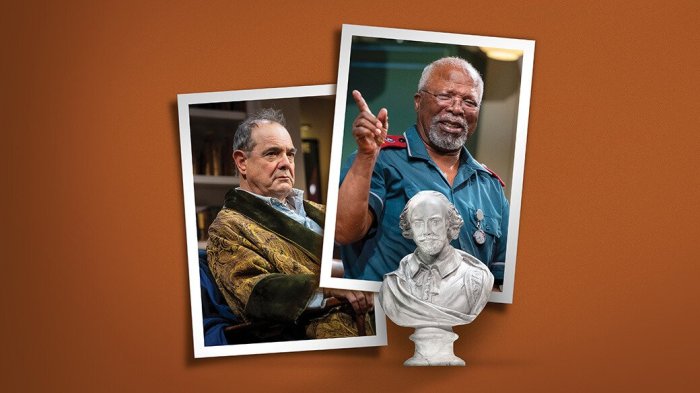
Kunene and the King. Guthrie Theater program art

Still curious

When I played Mark Rothko in Red about fifteen years ago, a patron asked me after opening whether it was the pinnacle of my career. Almost without thinking, I said, “Yes, and I hope not.” I still feel that way. Jack Morris is one of those roles that asks for maturity of the person and of the craft, and I’m grateful for it. But as I told the Guthrie, “I want to keep finding out what I don’t yet know how to do. That’s what makes me curious enough to say yes.”

See it

Kunene and the King plays the Guthrie Theater’s McGuire Proscenium Stage through November 8, 2026. Tickets are at guthrietheater.org. The tour continues to ArtsEmerson in Boston, April 1 to 11, 2027.

Kunene and the King by John Kani. Starring John Kani and Edward Gero, with Ntebo as Isithunywa. Directed by Ruben Santiago-Hudson. An Octopus Theatricals production.

Kunene and the King Set for The Guthrie in 2026 and ArtsEmerson in 2027!

John Kani’s Kunene and the King, a US premiere, brings us two great actors in a great play that explores the complex relationship between two South African men.

John Kani as Kunene
Edward Gero as Jack

Written by South African actor, activist and playwright John Kani, this refreshingly funny and vital new play had its US premiere in 2025 at Shakespeare Theatre Company.

South Africa, 2019. Twenty-five years since the first post-apartheid democratic elections, two men from contrasting walks of life are thrust together to reflect on a quarter century of change. Jack Morris (Edward Gero) is a celebrated classical actor who’s just been given both a career-defining role and a life-changing diagnosis. Besides his age, Jack has seemingly little in common with his at-home nurse Lunga Kunene, (John Kani) but the two men soon discover their shared passion for Shakespeare, which ignites this ‘rich, raw and shattering head-to-head’ (The Times).

For information and times of performances click link below

https://www.guthrietheater.org/whats-on/kunene-and-the-king

RBG, an appreciation

At the LOC. Moot Appeal Court for Shylock. I was Shylock. She was a Justice. And a friend.

“And though she be but little, she is fierce.” ~ W. Shakespeare

She was a giant.

Borrowing from what was said at Lincoln’s passing,”Now, [s]he belongs to the ages.”

Along with her victories for women and equality, Ruth Bader Ginsburg will be remembered as a great supporter of the arts, particularly Opera and the theater. She was a regular patron to Washington stages, and officiated at the weddings of both Michael Kahn and Molly Smith.

I first met Justice Ginsburg in 1996, when she joined other Justices to play cameos in productions at The Shakespeare Theater Company. This particular year we were giving our Henry VI. Justice Ginsburg appeared as a small part in the Cade Rebellion scene and with that schoolmarm voice said the immortal words, “The first thing we do, let’s kill all the lawyers.” She brought down the house, and as the applause was waning, she ad libbed, “And after that, all of the reporters.” She had performance chops.After my character the Duke of York was killed off, I retreated to the greenroom at the Lansburgh, and there she was, all alone at the table, while actors were lounging around in typical varying stages of undress attempting to behave normally. I couldn’t resist the opportunity to chat. I had read in the Post that there had been some last minute stay of execution by the Supreme Court that week, so I approached the Justice and said, “Excuse me, Justice Ginsburg, I hope I am not disturbing you, but what is the procedure for these kinds of stays of execution I read about this week? You don’t convene at night to consider these requests, do you?” I suppose I appealed to the professor in her. She said, “No, we do it by fax,” and then launched into a conversation about the Court schedule and other behind the scenes insights, with all of the actors now gathered around (and at her feet) in a private seminar. It was an astonishing moment.

I met her again, (this time at the Supreme Court) after having lunched in chambers with Justice Scalia for the first time, as I prepared for The Originalist. I reminded her of our first meeting during Henry VI, and asked if she remembered what she said, “Of course I do!” She repeated both the Shakespeare and the Ginsburg jokes without dropping a beat. She then walked over to her bookshelf of photographs of her with Mandela, Maya Angelou, Bill Clinton, and she showed me the picture of her curtain call, with me next to her, holding her hand and lifting her arm, presenting her to the audience. It had remained on her shelf for those intervening 20 years. That event had meant as much to her as it did to all of us. I was humbled.

She came to see The Originalist four times. The first was during the premiere run. She sent me a lovely note saying that I had “captured the spirit of her dear colleague perfectly,” and looked forward to seeing me on the stage often. Fan mail from a patriot!

Then, a few months later, Justice Scalia died. She and I encountered each other at his funeral at the end of the service. The Supreme Court Justices followed the casket of their fallen colleague out of the National Shrine of the Immaculate Conception. She wasn’t expecting to see me on the aisle, and if I thought I did not resemble her dear colleague Nino, when she saw me and gasped, as if she had seen a ghost, I wept with certainty. We shared a real moment of vulnerability. We took a step towards each other in what felt like an impulse to comfort one another, then she stopped short. She took a breath, pulled herself together. We nodded to each other, and she continued on.

Two years later, she came again, this time to do the first of two post-show interviews on the stage. This was at the Arena during our Encore run, the second in NYC during the Off-Broadway run. One that first occasion she said, “I love this play and the idea behind it that people with very different views on important things can genuinely like each other.” She yearned for a more civil discourse. In New York, she came the fourth and final time, and again spoke with Molly Smith on the 59E59 Stage. It was during that brief interval after Justice Kennedy had retired and before the confirmation hearings for Kavanaugh began. When the subject of her own eventual retirement came up, she cited the example of Justice John Paul Stevens. “He stepped down when he was 90,” she said, “so I think I have about, at least five more years.”

That was two years ago.

Alas.

It was a privilege to know her and to be known by her.

“O woe is me, T’ have seen what I have seen, see what I see!” ~W. Shakespeare

A Day in the Fields

Well what does one do in the midst of a global pandemic, when the baseball season ins on jeopardy, I have created over 20 shows of Cooking with Eddie: La Mia Cucina, and it is so hot out you can barely breath? Get out early to see some sunflowers in bloom and think of Italy, that’s what. And that is just what Marijke and I did this morning. It was heaven. A nice break from the grind.

May 22, 2020: An Arena Stage Docudrama

Theaters are shuttered in Washington, DC, and across the country. Nothing is being produced on Broadway. Most productions are not even being considered to open until 2021 at the earliest. The so-called gig economy is dead. So how are institutions and artists surviving? Will they be able to make it through 12 months of no business? Will audiences be confident enough to return to the theaters? The arts are in a crisis, like all of the world economy. It is a precarious time.

Many theaters I know are doing “salons.” Free programming via Zoom or other similar platforms, with interviews of artists discussing various topics, sometimes providing reruns of previous productions, all designed to keep brands alive and to to retain audiences. Other theaters are providing Zoom readings of plays. Most are benefits for a variety of charities, which mean artists are working for free to help save institutions.How long can artists donate their time for the sake of an institution? It’s a tough row to hoe. Zoom fatigue is setting in, and requests for donations are everywhere. What are theaters to do?

Molly Smith, Artistic Director of Arena Stage came up with something different. She though of the idea to produce an artistic snapshot of the DC region in the midst of a global pandemic. What if, she thought, she sent 10 playwrights out into the region to interview a cross section of Washingtonians on the same day, then write a 3-5 minute monologue of each interviewee, invite 10 Washington actors to perform the monologues with 2 hours of rehearsal, shoot it all on one day, outside, in one continuous shot, and pay the artists for their work! Well that is precisely what she did. The result is a 55 minute docudrama called May 22, 2020, a kind of synthesis of theater skill meeting film. It premiered last week and is available to stream live to anyone who cares to watch. Below is a clip of my piece about a Washington beekeeper.

From May 22, 2020

Molly is deeply committed to the community and looks for ways to keep the artists connected to the Arena audience through the actual work. It was a pleasure to work with her on the film. We rehearsed twice on the same day, a Thursday, and the piece was shot on the following Sunday. It was a whirlwind, but I think the results are really fine. The film is a great artistic snapshot of what we are all going through with the covid-19 pandemic. Then, a few days later, the world changed again with the shooting of George Floyd and the demonstrations against racial injustice that continue weeks later.

This is an extraordinary time to be alive. Challenging, anxiety making, hopeful, all at once. It is not often that a world confronts its own weaknesses and issues of the health of the body, the body politic, the economy, and that of the entire social structure. We move forward one day at a time, reflecting, listening, making art, demonstrating, voting, hoping to find ways to make the world better, more just, more perfect.

TO VIEW THE ENTIRE FILM MAY 22. 2020 CLICK THE LINK BELOW

https://www.arenastage.org/tickets/may-22-docudrama/

Operation Overlord: OSS and the Battle for France on Morning Joe

I was stunned when I woke this morning to hear Morning Joe introduce a clip from a documentary I was honored to narrate to commemorate the historic invasion that liberated Europe.

The documentary Operation Overlord: OSS and the Battle for France was recorded to commemorate the 75th Anniversary of DDay, It won two awards last year at the Palm Beach International.

I am very proud to be associated with this project. Here is the official trailer.

If you are interested in viewing the entire short film you can see it on YouTube here

It is an amazing piece of history and a beautiful piece of artistry in this project. Thank you to director Carl Colby, producers Walker Lambert, Charles Pinck, and Karolina Jasinska de Benavides.

Isolating at home: March

In response to the Covid-19 spread, we decided to hunker down at home on the 13th of March. It has been 16 days now, and we were apparently clear of exposure, so far. We are doing our best to keep chins up: we are doing mindfulness practice and yoga a few times a week, I am out weeding and tending to the garden, about to plant some lettuce and arugula so we have some fresh produce in the coming weeks, and we are ever grateful for our dog, Demi, who gives us unconditional love and emotional support. We pray for the health and strength of our family and friends, our relatives in Italy, and all over the world.

My profession is taking a huge hit, both on an institutional level and personal. Work is shuttered. Much Ado About Nothing was postponed until next season, and the new Theresa Rebeck play Enlightenment which I was scheduled to rehearse in August has been pushed back a full year. Can theaters in Washington survive? When I first came here there were 5 theaters, now somewhere around 80. I expect many of the smaller theaters, and perhaps some of the larger institutions will be damaged, if not silenced forever. It is a very sad time everywhere.

However, we as artists continue to express ourselves via the net. My dear old friend and colleague, Michael Gaston, (who was in a production of Fuente Ovejuna with me in the early 90’s at the Shakesepeare Theatre at the Folger) started a hashtag #readasonnet. It’s fantastic. Folks are getting up, recording and posting a piece. Patrick Stewart started reading Shakespeare on Twitter as well. It’ a thing. Check it out. Here is my contribution.

Sonnet 91 #readasonnet

I believe, like the monks of the Middle Ages who gathered and conserved the great books of culture and held them in safe-keeping, we as artists have a responsibilit to bring our culture and values forward through our art. There will be an end to this, there will be a Renaissance, and we will flock to the arts, to meet, collect, reflect, exhult, exhalt, and celebrate our humanity in theatres and concerts halls, opera houses, and art museums and galleries across the world.

Until then,

Be safe.

Much Ado About Nothing POSTPONED

Like many other shows around the country effected by the mitigation effort for the oncoming Covid-19 emergency, Simon Godwin and team at Shakespeare Theatre Company (STC) have decided to postpone the production of Much Ado About Nothing rescheduling it as part of the 2020-21 season. I am looking forward to playing Leonato under Simon’s direction, getting to know him, his process, and how he is shaping STC in his mew leadership role. We have met several times and have developed a correspondence. Having been a part of that organization since 1984 to the present, covering a few years leading up to and through the entire duration of the Michael Kahn era, I remain committed to being a part of the new Godwin chapter. However, I certainly am relieved to know that the safety of the artists and patrons is the primary impetus for the decision.

I know this crisis will effect the so-called “gig’ economy, of which we “working stiffs” are a part, for many months. I certainly wish everyone health and safety in the trying days before, and pray for strength. patience, and caring for each other. How will we be different? All I know is that life is precious. Peace. And God speed.

Beginning again

Because of what I felt to be a very successful and satisfying experience of journaling the artistic process with my first blog “The Making of RED,” I wanted to do the same when I began the process of portraying Justice Antonin Scalia with Molly Smith and John Strand on his new play The Originalist. Although it has been almost 6 years since that process began, the idea of the blog was deferred at the time, as the script was embargoed until the opening of the world premiere. That made good sense. Besides, the process was well chronicled in the media. But then in it’s second incarnation and first revival, it seemed appropriate to return as the play was about to begin rehearsals in 2016 at Asolo Rep in Sarasota, Florida, after its very successful world premiere run at Arena Stage from March through June 2014.  I was pleased to return to this script and role, as it had major and long lasting personal significance having spent so much time with the Justice himself in his last full term on the Supreme Court. That is the subject of another endeavor, perhaps with a working title, “My Year with Nino.”  Unfortunately, I did not write that blog. I don’t know. Perhaps because the Justice had passed away, or that there was a new administration. It is a bit if a regret, as the play opened on inauguration day 2017 and had a life span of 18 months, traveling across the country from Florida to California, back to Washington, DC, then Chicago, and on to New York, all the while measuring the temperature of the body politic and the decay of civil discourse that the play was attempting to forestall. Nonetheless, I return here, finally setting up a webpage of my own, to chronicle what I am calling The Working-Stiff Actor, a blog of the day to day ins and outs, ups and downs of a working life in the theatre. I hope you come back from time to time, read, and comment. Enjoy!