By Edward Gero
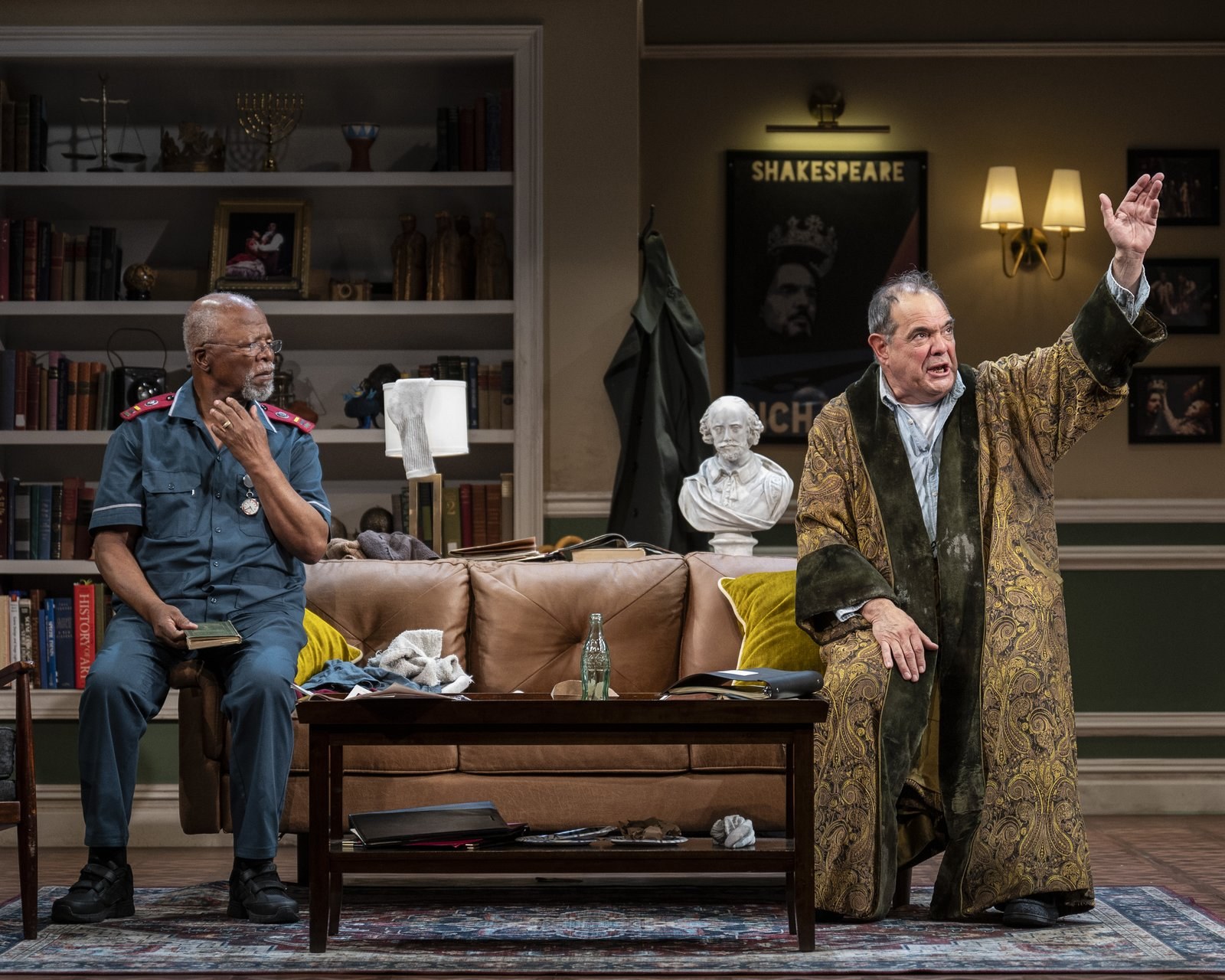
Two years ago I lived in an apartment building a few blocks from the Guthrie while I was doing The Lehman Trilogy. This fall I came back to the same building, to the same layout, just two floors up. Some things were familiar. The man arriving was not quite the same one.
I came straight from a long summer in Italy, where the days were slower and I had time to think. The week in between was a flat stone skipping across a pond: packing, shipping, a few readings, some goodbyes, and then another plane. Then I walked into a rehearsal room and got a hug from John Kani.
(Some passages below come from the interview I gave the Guthrie for opening. You can read the full Guthrie Q&A on the Guthrie’s website.)
Back in the room
The first day of rehearsal was a celebration. John, Ntebo, our director Ruben Santiago-Hudson, and our two understudies, John Lescault and Peter Callender, were all back together. Before the crowds arrived we had a little time to ourselves to catch up. Then the whole Guthrie staff filled the room, and John spoke about where the play comes from and why it mattered to bring it here. I’ve watched him do this many times. He catches people with a bit of humor, then becomes very open and speaks straight to them. It isn’t technique. It’s real connection, and he has an extraordinary gift for it.
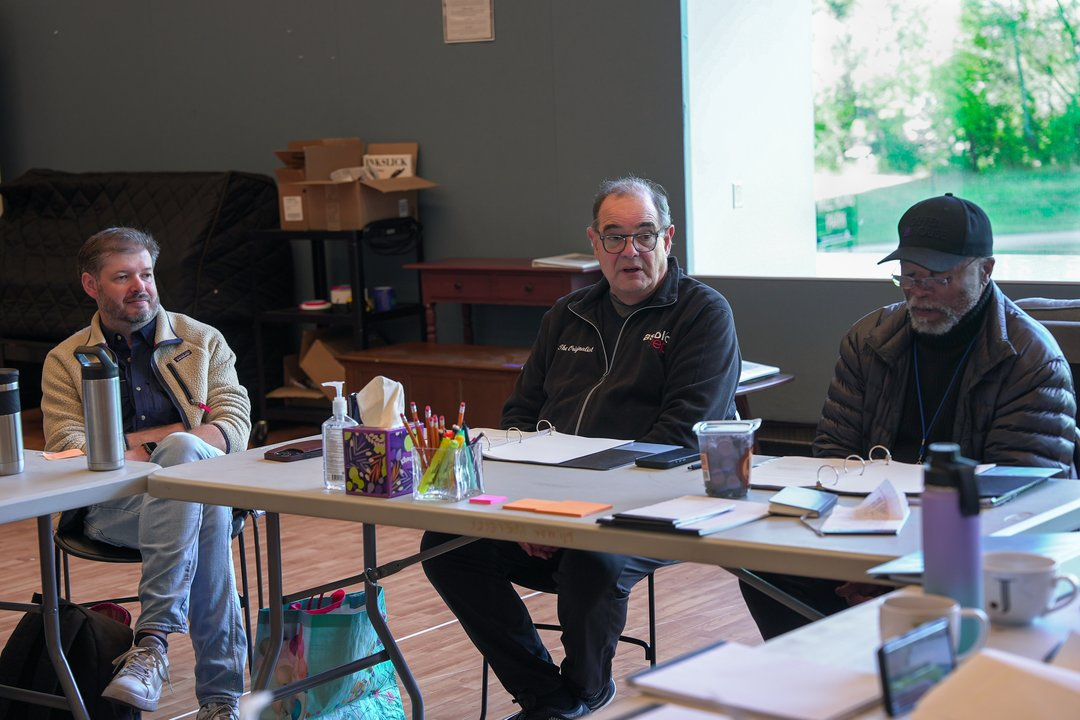
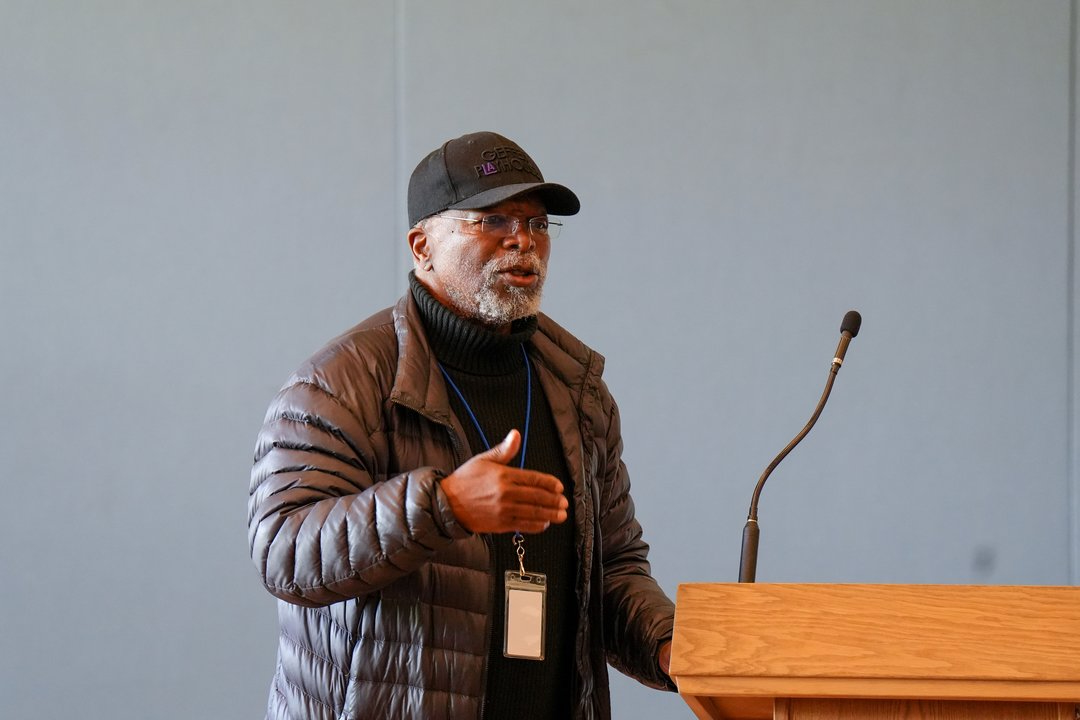
This play is John’s brainchild, and he has played Lunga throughout its life, beginning opposite Antony Sher at Stratford. As I told the Guthrie, “I’m his third distinct acting partner in this role, yet he approached our work with a beginner’s mind. Rather than expecting me to fit into something already established, he welcomed my own experience and allowed us to discover Jack and Lunga’s relationship together.”
Ruben made that possible too. “He created a rehearsal room in which John and I could explore freely,” I said. “You can bring everything you know to the work, but you can also admit what you don’t know, try something and risk being wrong.”
Then we read the play, and I heard it again. That was exciting. It was also a reminder of how much work was in front of us.
Remembering before changing
A remount is a strange kind of rehearsal. You aren’t starting from nothing, and you aren’t simply repeating what you did. My own process is that I need to remember where we were before I can change anything. Until I can recall what a moment was, I don’t really understand what a change will do to the story. So for the first week my brain was busy chasing the old flow and the old specifics while new information kept coming in.
The stage was also a little different. The set had been made lighter and smaller so it could travel, and the playing space was tighter. Not all the props had arrived, so we invented some and had to adjust to others. I’m grateful to John Lescault, who remembered details for me that I had lost.
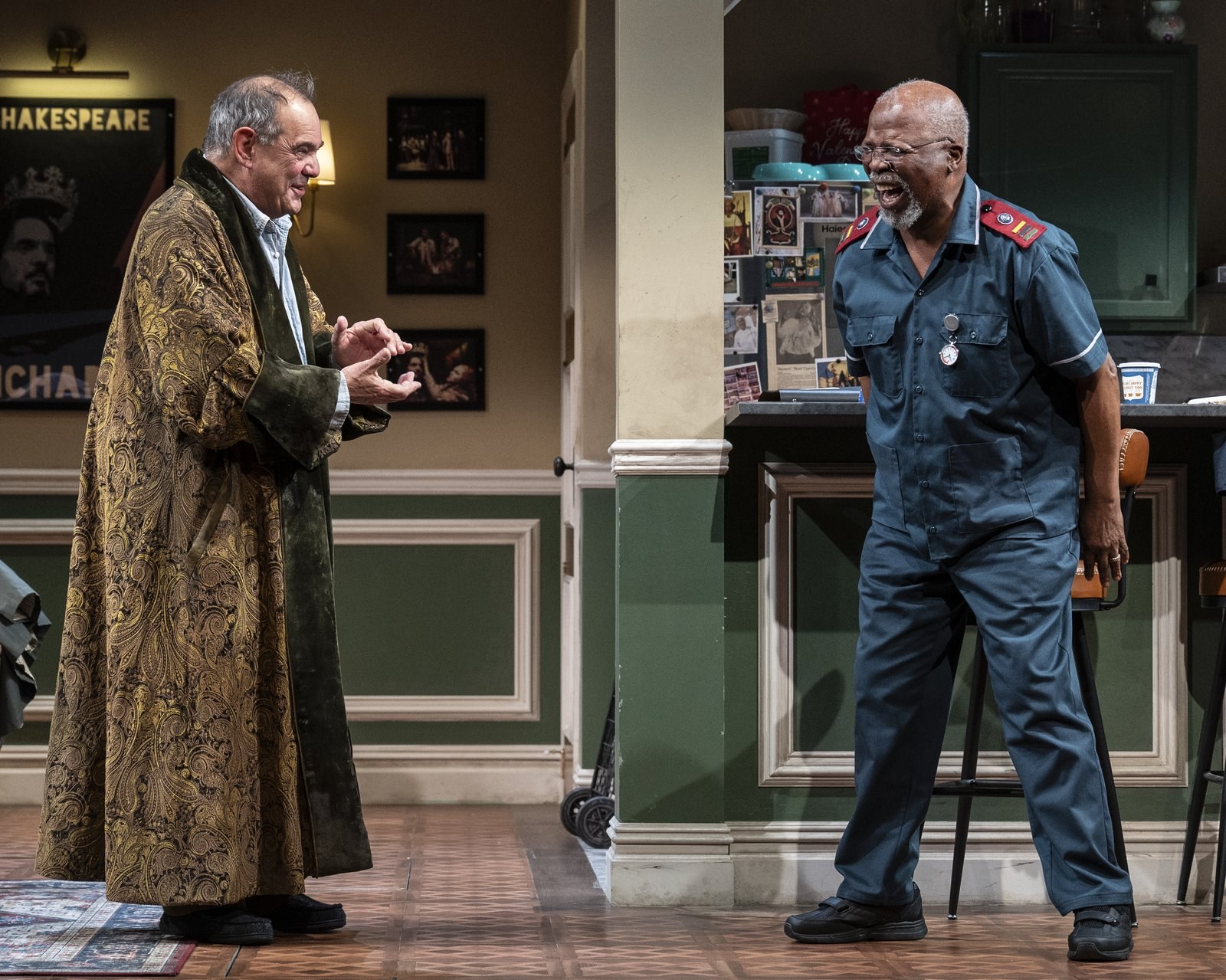
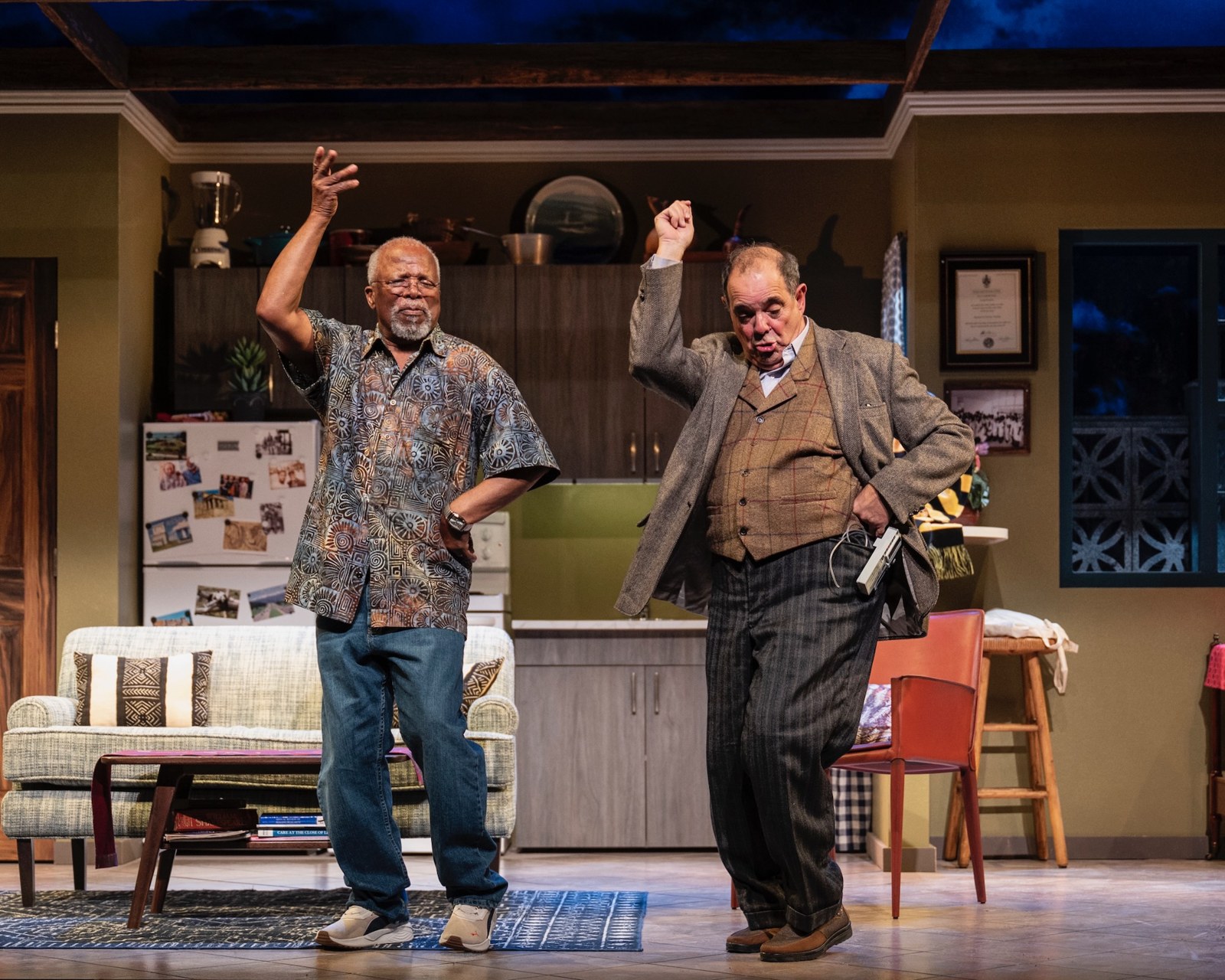
There are physical moments I was determined to protect, because they set up the comedy and tell the story of the relationship. John is freer in his movement, and he would sometimes wander from what I remembered. Once we talked it through, he’d find his own way into it and make it his. Our associate director, Tim Johnson, checked the video of the Washington production for us, which settled more than one question gracefully.
One small discovery stays with me. There’s a speech about forgetting lines that seemed to want a quick, bright tempo. I slowed it down, and it got better. It isn’t a moment for showing off. It’s just telling the story and leaving it at that.
Recovering the old performance was only half the job. “I want to listen even more closely to John and see what we discover this time,” I told the Guthrie, “rather than simply reproduce what we found before.”
Depth instead of breadth
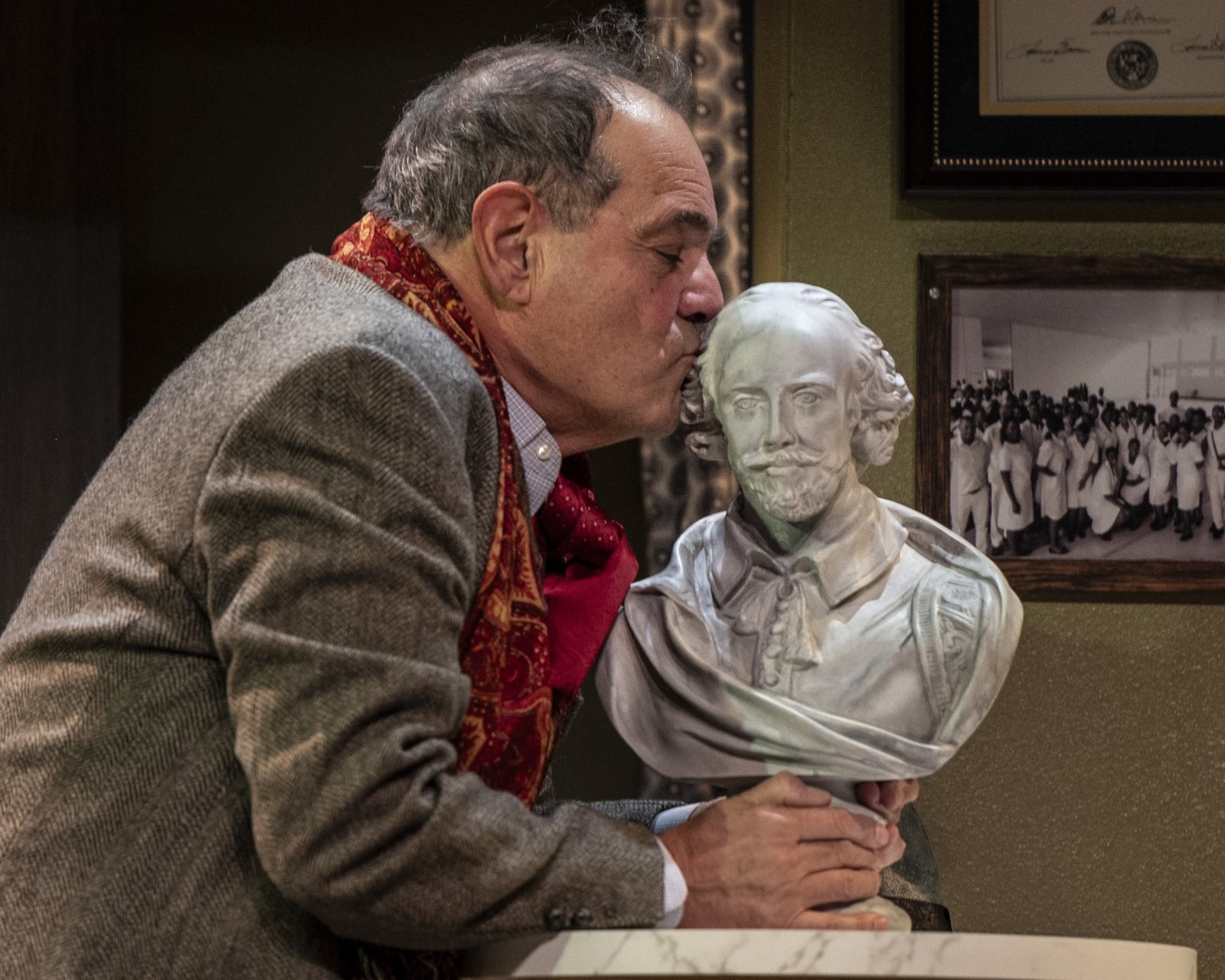
The last time I was at the Guthrie I played some thirty characters over three hours in The Lehman Trilogy. This time I stay with one man for about an hour and forty minutes: Jack Morris, a celebrated South African classical actor who has just been offered King Lear and, at almost the same moment, been told he is dying.
“That doesn’t make it less demanding,” I told the Guthrie. “Jack’s physical deterioration, his fear, his resistance to dependence and his need to preserve some sense of himself all need to coexist together. The challenge is to allow those things to unfold without getting ahead of him or deciding too quickly who he is. In Lehman, I needed to make the shifts between characters legible. Here, I’m exploring the shifts within a single person.”
The role is also very physical. In tech we drilled the big transition between the second and third scenes over and over: a heavy set moved by hand, a quick change, and me in my undergarments in a cold theater, screaming through Jack’s attack for as long as it took the crew to get it right. We did ten-hour days. Everyone kept their good humor, and I learned to mark the screaming so I’d still have a voice for opening.
Real food that real people eat
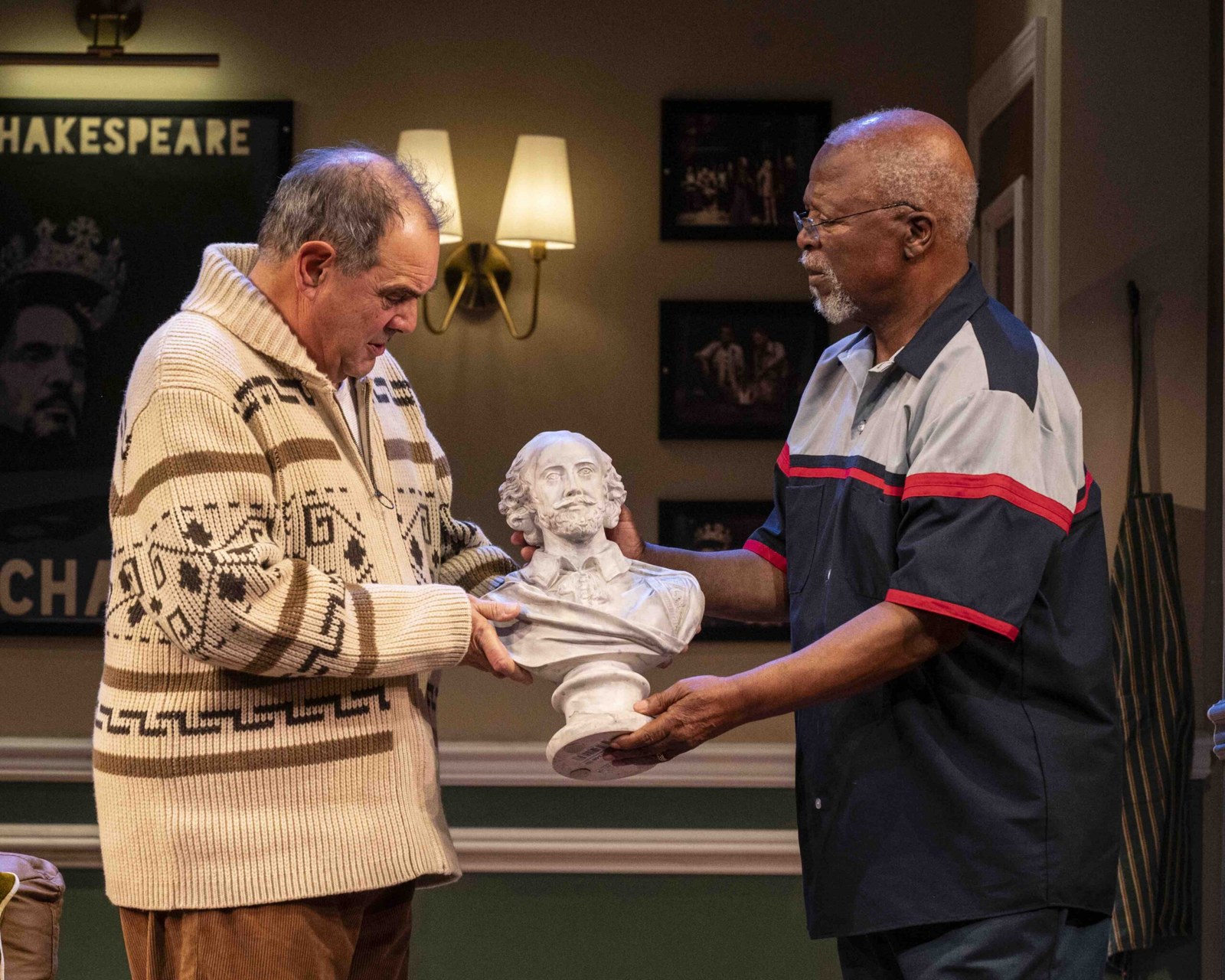
The crew carried us through tech, and I like to say thank you in the language I know best. I brought in sausage and peppers and announced it with a line of Jack’s: “real food that real people eat.” John, Ntebo, and I sat backstage and ate it warmed up in the production kitchen. Banana bread came later, and more recently a pot of white chicken chili that I shared with John and Ntebo. It’s a small thing, but it’s mine.
The first audience
Before the first preview I felt the old familiar resistance. I had a funny buzz in my body and a warmth around my ears, and part of me wondered whether, without the charge the first production carried for me, it would feel like just a job. I decided that was all right. It is a job, and I trusted it to deliver.
It did. The audience was with us from the beginning. The laughs came back, they listened with rapt attention, and they rose at the end. I walked out completely energized.
Alive onstage
John has told me he wants a performance to be alive. He wants to know that something might go wrong.
One night during previews, something did. There was a long silence where John’s line should have been, and I picked up the thread and kept us moving. (It turned out something had caught in his throat.) Later, my character’s cellphone wasn’t in my jacket pocket when Jack needed it for the photographs, so I asked John’s character for a camera and he took it from there. We looked after each other that night. That trust is the real foundation under everything we’ve rehearsed.
An encounter, not a resolution
Jack and Lunga find each other through Shakespeare, but they come to him from very different directions. Jack has spent his life with the Bard. Lunga first met him at school, in Julius Caesar, in isiXhosa. “They can discuss Lear before they’re ready to discuss themselves,” I said in the interview. “Jack knows the words; Lunga helps him confront what they might actually mean.”
Their affection never makes their differences disappear. “Their relationship isn’t a steady progression from suspicion to friendship,” I said. “It’s much less tidy than that.”
I think of John as an ambassador of reconciliation. Given everything he has endured, I’ve been struck by how little bitterness I’ve ever found in him. I once asked him how he had managed it. He said, “I got tired of being angry.” That has stayed with me.
“I don’t know that theater alone can reconcile people,” I told the Guthrie. “But it can create the conditions for an encounter: a chance to listen, to recognize someone we might otherwise keep at a distance and perhaps to question our own certainty.”
What the critics are saying
We opened on October 15, and the response has been wonderful.
- “Both Kani and Gero give monumental performances.” (Arthur Dorman, Talkin’ Broadway)
- “Gero and Kani are fearless together.” (Rohan Preston, Minnesota Star Tribune)
- “A charismatic, consistently scene-stealing portrayal.” (Rob Hubbard, Pioneer Press)
- “Two-handers are my favorite kind of play, and these two actors are simply divine.” (Jill Schafer, Cherry and Spoon)
- “Jack Morris, brought to life with intense emotion and fervor by Edward Gero.” (Joe Sarafolean, BroadwayWorld)
Every one of these reviews names both of us, which is exactly as it should be. This play is a duet.
Still curious
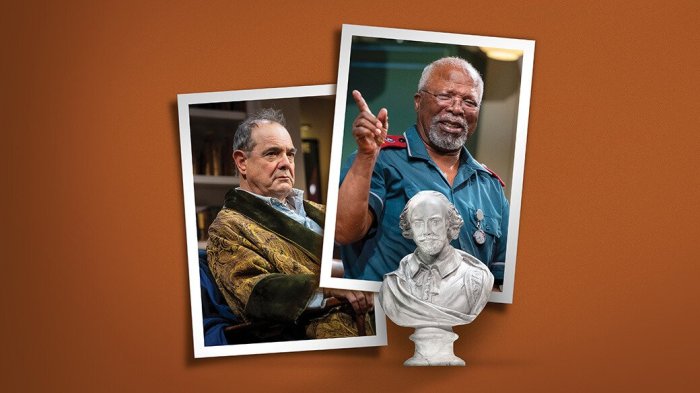
When I played Mark Rothko in Red about fifteen years ago, a patron asked me after opening whether it was the pinnacle of my career. Almost without thinking, I said, “Yes, and I hope not.” I still feel that way. Jack Morris is one of those roles that asks for maturity of the person and of the craft, and I’m grateful for it. But as I told the Guthrie, “I want to keep finding out what I don’t yet know how to do. That’s what makes me curious enough to say yes.”
See it
Kunene and the King plays the Guthrie Theater’s McGuire Proscenium Stage through November 8, 2026. Tickets are at guthrietheater.org. The tour continues to ArtsEmerson in Boston, April 1 to 11, 2027.
Kunene and the King by John Kani. Starring John Kani and Edward Gero, with Ntebo as Isithunywa. Directed by Ruben Santiago-Hudson. An Octopus Theatricals production.

